Core Definition
Coolant / Cutting Fluid itself is typically odorless or has only a mild chemical smell. That foul rotten-egg or sewer odor comes from hydrogen sulfide — a metabolic byproduct of anaerobic bacteria. Many managers assume regular fluid changes will solve the problem, but that is only treating the symptom. Finding and eliminating the root cause that allows anaerobic bacteria to thrive is the only real solution.
Why Coolant / Cutting Fluid Goes Foul: The Real Cause
The root of the problem is not the coolant itself, but the tramp oil contamination — guideway lubricating oil and hydraulic oil — that inevitably seeps into the tank during machine operation.
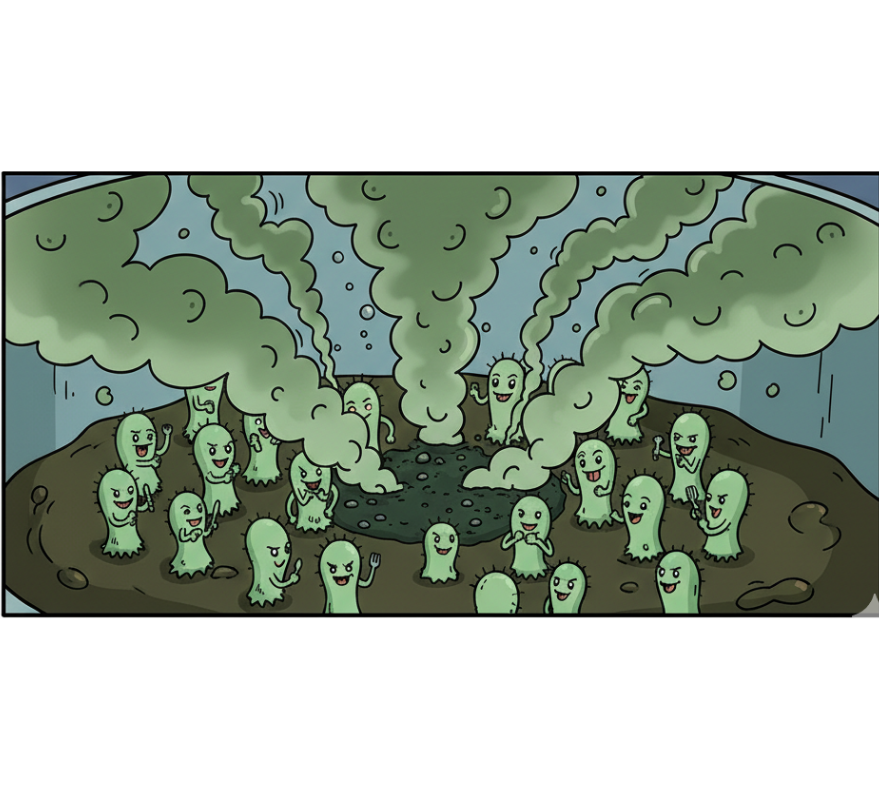
These waste oils are lighter than water and float on the tank surface, forming a thick "oil seal" that triggers a cascade of deterioration:
1
Tramp Oil Layer Forms
Lube and hydraulic oil seeps into the tank and floats on the surface, forming a sealing oil layer
→
2
Oxygen-Depleted Environment
The oil seal blocks air; coolant at the bottom of the tank becomes completely deprived of oxygen
→
3
Anaerobic Bacteria Proliferate
Anaerobic bacteria explode in the oxygen-free environment, decomposing the coolant and releasing hydrogen sulfide odor
Root Cause Chain: Tramp Oil → Oxygen Depletion → Anaerobic Bacteria
Break the first link in this vicious cycle — eliminate tramp oil — and the odor problem can be resolved at its root.
More Than Just Unpleasant — The Real Cost of Degraded Coolant
Many managers dismiss coolant odor as an "environmental problem," but in reality it is quietly eroding profits at every level:
Worker Health Hazards
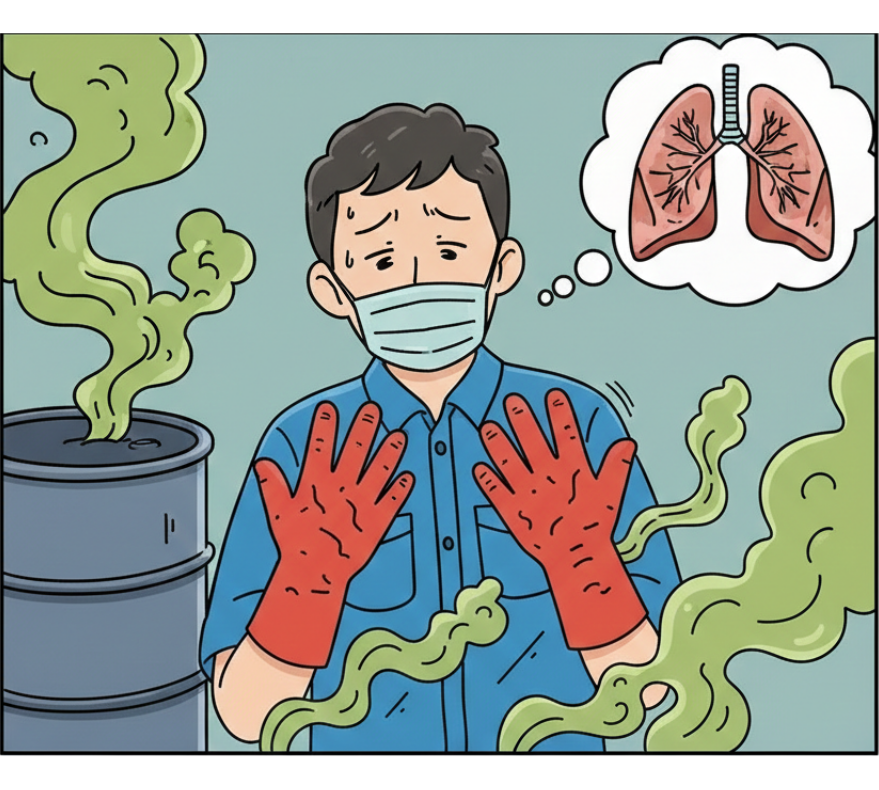
Degraded coolant drops in pH; prolonged exposure causes operator skin irritation and redness (contact dermatitis), and in severe cases respiratory problems, increasing occupational health risks.
Potential Cost: Employee turnover, occupational disease compensation
Tool Life Cut in Half
Bacteria decompose the lubrication and anti-rust additives in the coolant, accelerating tool wear, causing workpiece surface rust, degrading machining quality, and raising defect rates.
Potential Cost: Tool expenses ×2–3
Coolant System Blockage
Microbial growth and sludge accumulate and clog pumps and coolant lines, causing overheating during machining and in severe cases unplanned downtime that directly impacts production capacity.
Potential Cost: Downtime losses + equipment repair costs
Frequent Fluid Changes Are Not the Answer — They Are Paying to Mask the Problem
The cost of each fluid change, the downtime involved, and waste disposal fees add up to far more than the investment in a proper purification system.
The Root-Cause Fix: Why an Ozone Oil-Water Separator Is the Best Solution
Several common coolant maintenance solutions are available, each addressing different aspects of the problem:
Standard Oil-Water Separator
Uses a steel belt or disc to skim surface tramp oil, allowing coolant to re-contact oxygen and inhibit anaerobic bacteria growth.
Solves: Tramp Oil
Sludge Filtration System
Periodically vacuums fine particles and sludge from the tank bottom, reducing bacterial breeding grounds and extending coolant life.
Solves: Sludge
Ozone Oil-Water Separator
While removing tramp oil, injects ozone directly into the coolant to eliminate anaerobic bacteria and neutralize odors at the source.
3-in-1 ★ Best Solution
AEGIS CNC Recommended Accessory
Ozone-Equipped Oil-Water Separator
Oil Skimming × Sterilization × Deodorization — three functions in one device, eliminating all coolant management pain points
-
Physical Oil Skimming: Continuously removes surface tramp oil, breaking the oil seal and allowing coolant to breathe oxygen again, cutting off the conditions for anaerobic bacteria survival at the source.
-
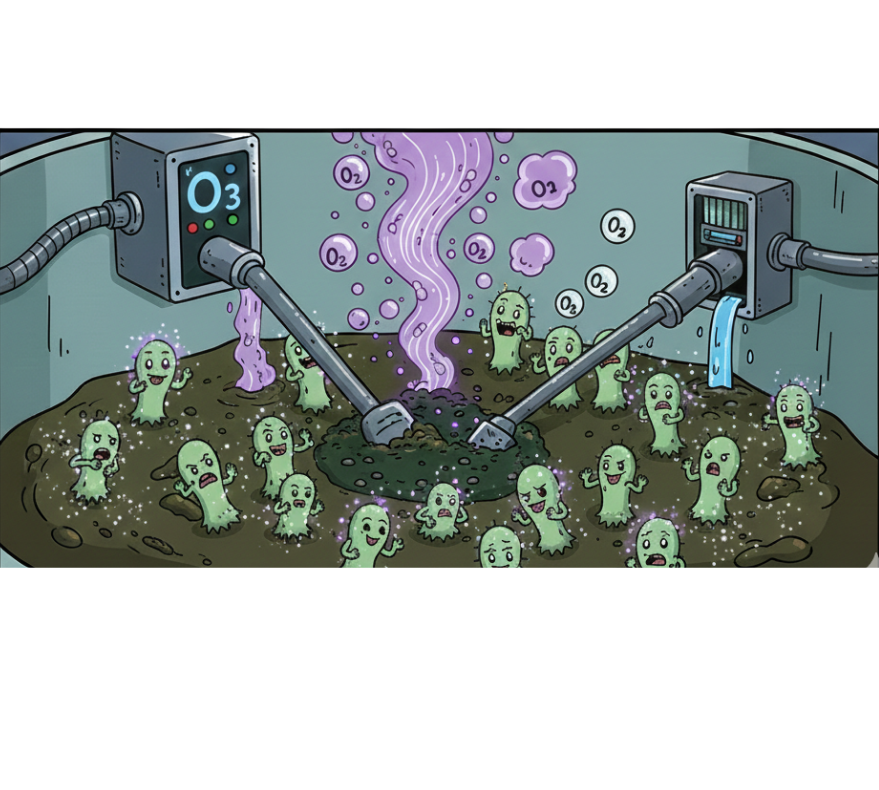
Ozone Sterilization: Ozone (O₃) has extremely powerful broad-spectrum bactericidal capability, targeting stubborn anaerobic bacteria and biofilm. It reverts to pure oxygen after reacting, producing zero secondary pollution.
-
Real-Time Deodorization: Ozone simultaneously decomposes hydrogen sulfide and other odor molecules, significantly improving the factory environment and greatly reducing employee health risks.
-
Coolant Life Extended 3–5×: Maintaining healthy coolant continuously saves fluid change costs, waste treatment fees, and tool consumption costs.
-
Eco-Friendly: Reduces waste coolant discharge, lowers wastewater treatment burden — a concrete practice of sustainable manufacturing.
Interested in the AEGIS Ozone Oil-Water Separator? Contact us for detailed specifications and pricing.
Learn Product Details →