AEGIS CNC / TURN-MILL CENTER KNOWLEDGE

What Is a Turn-Mill Center?

A Turn-Mill Center integrates the functions of a conventional lathe and a milling machine into a single machine, completing turning, milling, drilling, and more in a single setup. This article introduces the compound machining powerhouse that doubles efficiency in precision manufacturing.

Beginner Turn-Mill Center Knowledge AEGIS CNC Technical Knowledge Hub
Core Definition A Turn-Mill Center is a compound machining system that integrates turning and milling functions into a single machine. In a single workpiece clamping, it can complete outer diameter turning, face turning, surface milling, drilling, tapping, and more — dramatically reducing the number of re-clampings and cumulative errors. It is one of the mainstream choices for modern precision part manufacturing.

What Is a Turn-Mill Center: A Lathe and a Mill, in One Machine

To understand a Turn-Mill Center, start with two types of machine tools. A lathe rotates the workpiece while the cutting tool moves axially — ideal for machining cylindrical parts. A milling machine rotates the cutting tool while the workpiece moves, capable of machining flat surfaces, slots, and complex contours.

In traditional manufacturing, a single part often needs to be machined on a lathe first, then unloaded and transferred to a milling machine — each machine transfer introduces repositioning errors that accumulate and seriously impact final dimensional accuracy.

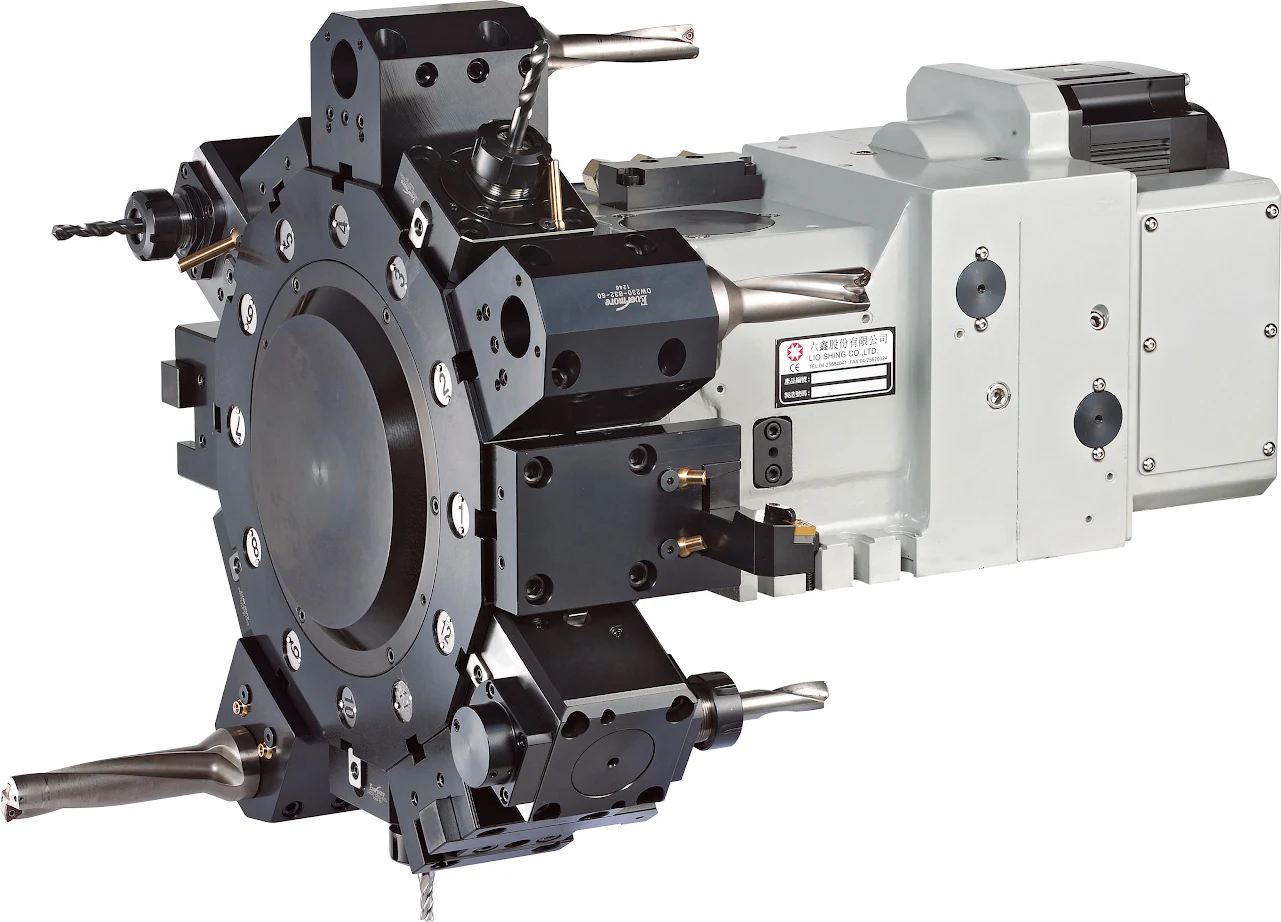
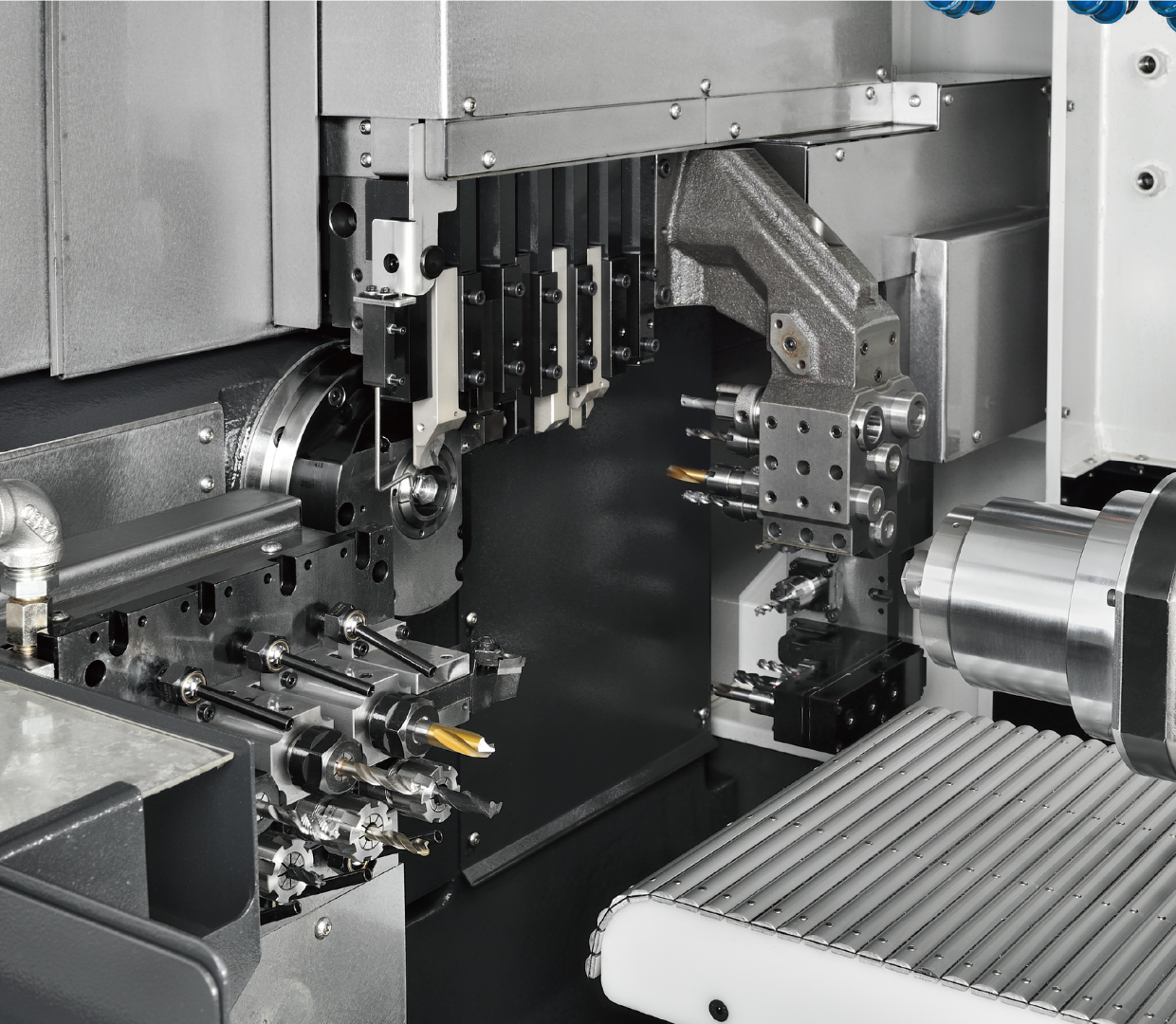
The Turn-Mill Center merges both into one. The machine is equipped with a Live Tooling Power Turret: milling cutters, drills, and other tools on the turret can be actively driven to rotate. This means the machine can perform milling, drilling, and tapping operations while turning cylindrical surfaces — truly one machine, many operations.
Single Setup — Complete Machining
Turning + Milling + Drilling + Tapping, all on one machine. No machine transfers, no repositioning. Higher accuracy, faster throughput.
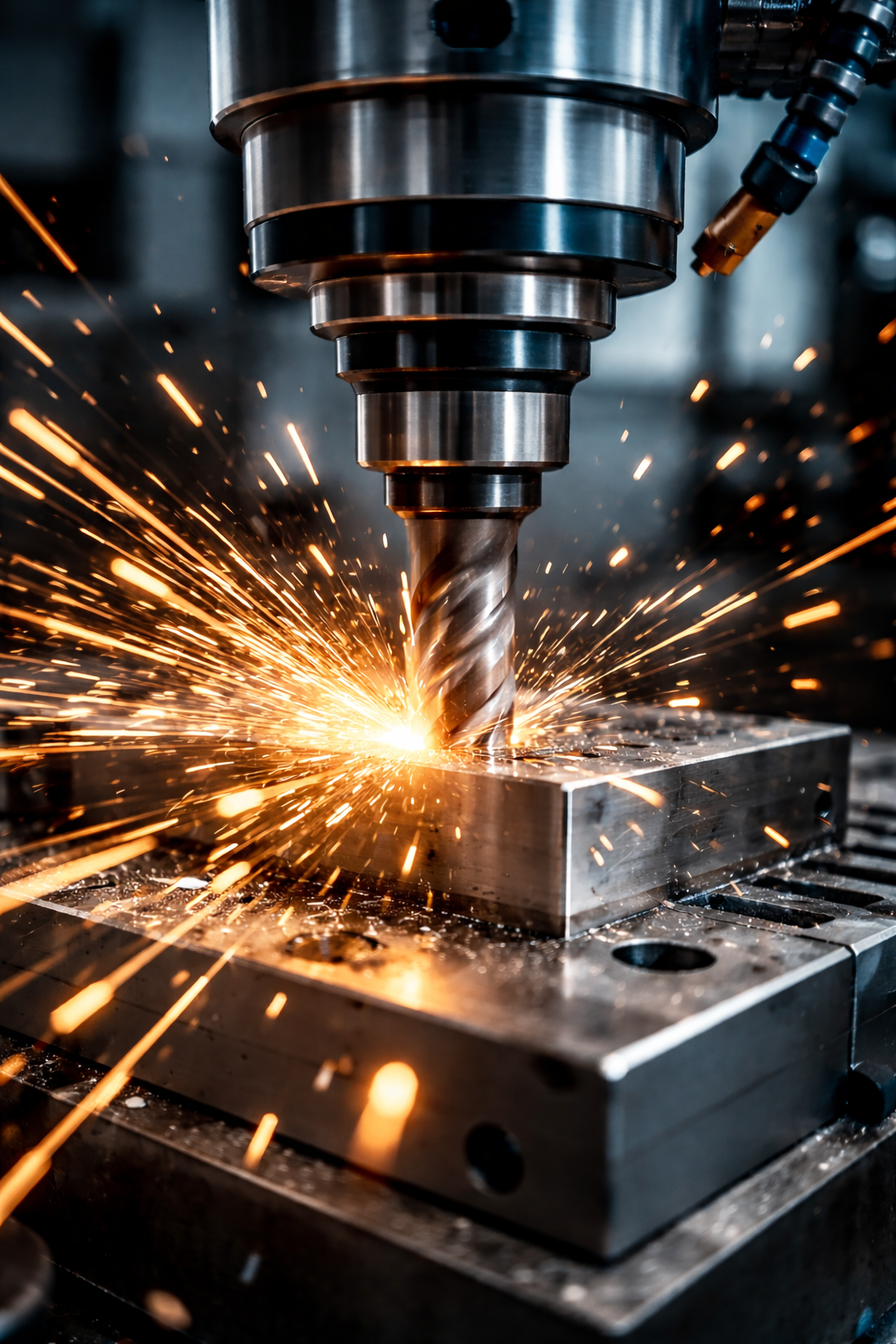
Milling in action: rotating cutter engaging a metal workpiece, illustrating the core principle of milling

Key Advantages of Turn-Mill Centers: A Complete Upgrade in Machining Capability

Compared to conventional single-function lathes, Turn-Mill Centers offer across-the-board improvements in accuracy, efficiency, and machining flexibility — the main reason precision part manufacturers adopt compound machining:

Accuracy
Single Setup Eliminates Cumulative Error
The workpiece never leaves the machine, avoiding the cumulative positioning errors caused by multiple machine transfers. Final dimensional accuracy is more stable and reliable.
Efficiency
Dramatically Shorter Cycle Times
Eliminates time spent on transfer, waiting, and re-clamping. Overall machining cycles can be shortened by 30–60%, well-suited for small to medium batch production.
Space Saving
One Machine Replaces Two, Lowering Equipment Costs
Integrating turning and milling reduces the number of machines on the shop floor, simultaneously cutting equipment purchase, maintenance, and floor-space costs.
Complex Geometry
Machine Non-Round Profiles and Complex Contours
Milling capability breaks the limitation of pure turning, which can only machine round cross-sections. Flat surfaces, slots, and irregular holes can all be completed in a single setup.
Flexibility
Fast Changeover for Multi-Part Production
Quick program switching makes it ideal for high-mix, low-volume custom production, reducing setup time for changeovers between part varieties.
Labor Optimization
Less Manual Intervention, Approaching Unmanned Operation
Combined with bar feeders and robot arms, the machine can run extended unmanned machining cycles, significantly reducing labor costs.

Main Applications: What Workpieces Are Best Suited?

Turn-Mill Centers are especially suited for parts that combine cylindrical features with complex contours — workpieces that traditionally require multiple turning, milling, and drilling operations. The most common application scenarios include:

Automotive driveshafts & joints
Hydraulic valve bodies & fittings
Aerospace structural precision parts
Medical surgical instrument components
Drone propulsion system parts
Robotic joint components
Semiconductor equipment fixtures
Mold core pins & guide pillars
Optical instrument precision shafts

Conventional CNC Lathe vs. Turn-Mill Center: How to Choose?

Turn-Mill Centers are powerful, but not every workpiece requires this level of equipment. Understanding the differences helps you make the most cost-effective choice:
Conventional CNC Lathe
Turn-Mill Center
Turning only — milling requires a separate machine
Turning + Milling completed in one setup, no machine transfer needed
Multiple transfers cause cumulative positioning errors
Single clamping minimizes error accumulation
Can only machine cylindrical features
Can machine flat surfaces, slots, irregular holes, and complex profiles
Lower equipment cost, suitable for pure turning requirements
Higher initial equipment investment
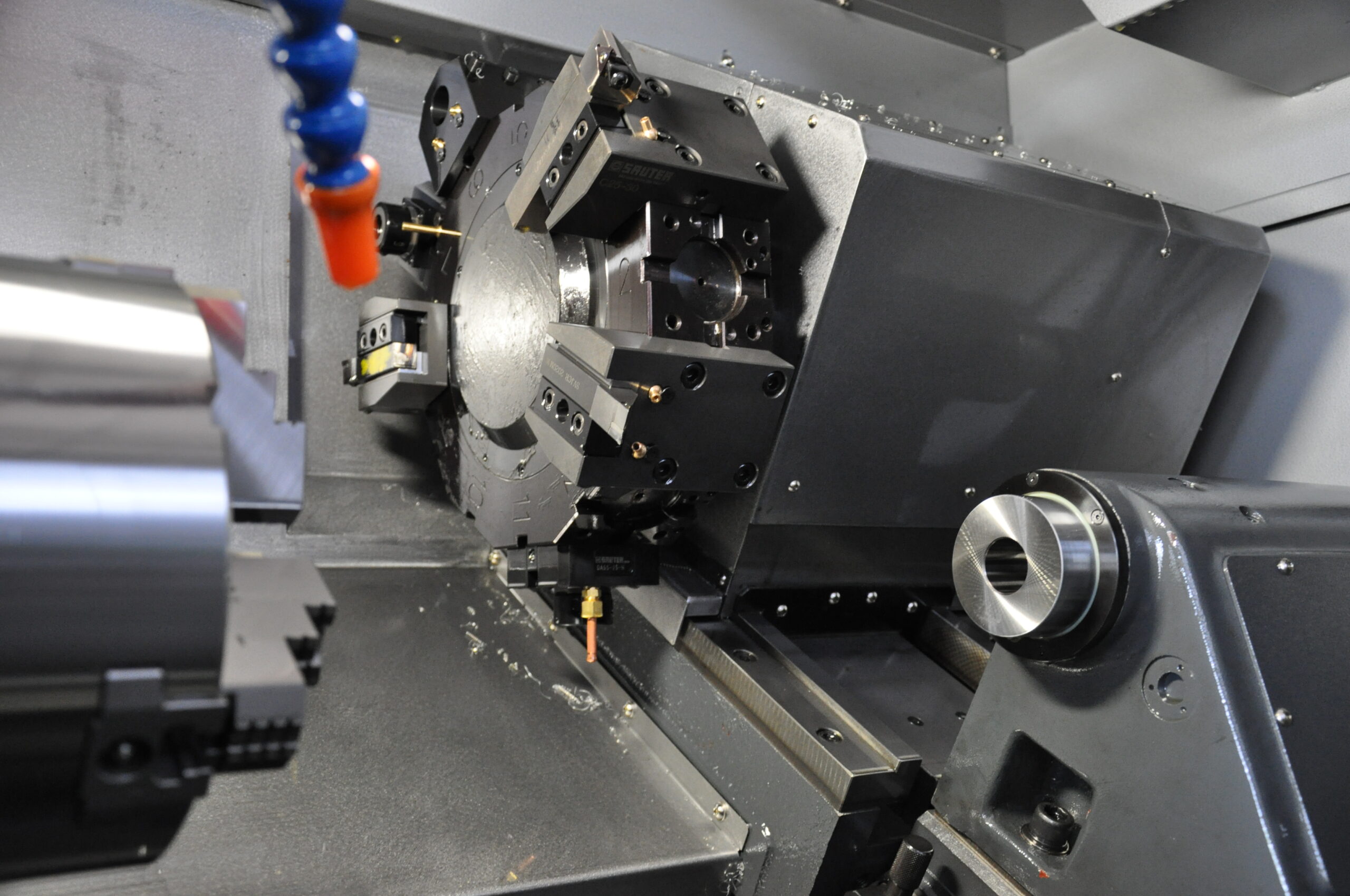
AEGIS CNC Turn-Mill Center in operation: power turret configuration enabling both turning and milling in one machine

If your workpiece has only cylindrical features (such as shafts, tubes, or screws), a conventional CNC lathe is sufficient — and the equipment cost is lower.

If the workpiece also requires surface milling, cross-drilled holes, or tapping, a Turn-Mill Center is the better choice — a single setup completes the part, delivering higher accuracy and long-term value far exceeding the price difference.

AEGIS CNC offers a complete range of configurations from pure turning to Turn-Mill Centers. Our technical team can help evaluate the most suitable machine combination for your specific workpiece requirements.

AEGIS CNC / EXPERT CONSULTATION

Considering a Turn-Mill Center?

From workpiece assessment to machine selection, the AEGIS technical team offers free one-on-one consultation to help you find the most cost-effective compound machining solution.