Automation Selection / Complete Automation Equipment Selection Guide

How to Choose the Right Automation Equipment for a CNC Production Line?

All three aim to keep machines running non-stop, but bar feeders, gantry robots, and articulated robot arms take completely different paths. Choose right and production efficiency doubles; choose wrong and setup time may exceed manual labor. This article analyzes the essential differences and applicable boundaries of the three solutions.

Intermediate CNC Automation Selection AEGIS CNC Technical Knowledge Hub
Core Definition CNC automation peripheral equipment refers to mechanical systems integrated into machine tool production lines to replace manual part loading/unloading, material transfer, or inter-process handling. The key to selection is not the equipment's technical level, but the matching of four core constraints: workpiece initial form (bar stock, block, or irregular shape), cycle time, production type (high-volume stable production vs. high-mix low-volume), and floor space and traffic flow — all four must match simultaneously for automation to deliver true value.

Analysis of Three Mainstream Automation Solutions

The most common CNC production line automation peripherals can be divided into three categories, each corresponding to different workpiece types and production logic. Understanding the design principles and applicable boundaries of all three is the first step in making the right selection.
1
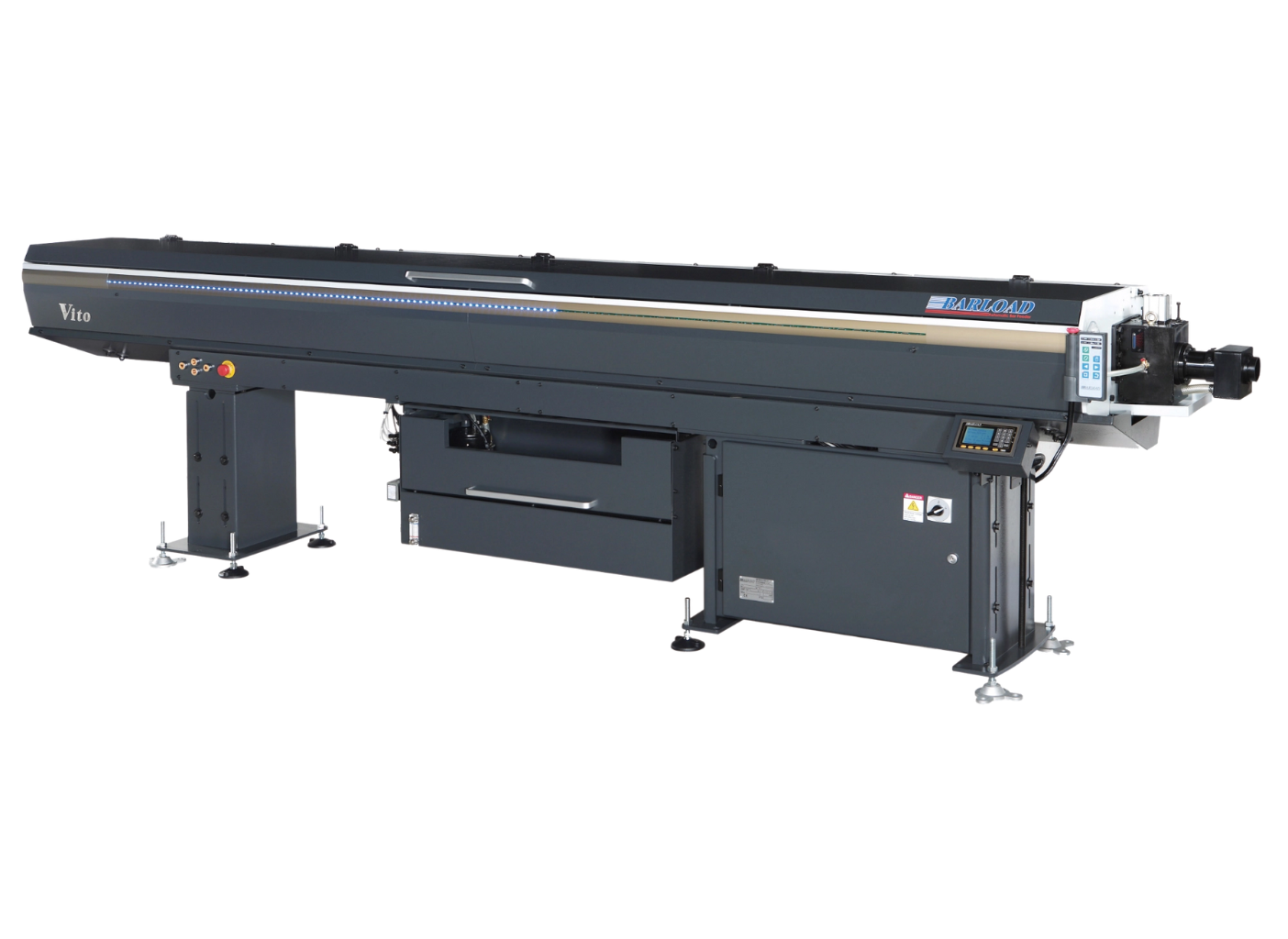
Bar Feeder Bar Feeder
AEGIS CNC Bar Feeder

Bar feeders are divided into long bar type (requires guide tube, suitable for 3–12 m bar stock) and short bar type (space-saving, supports high spindle speeds), used with front or rear stock receivers. Their core advantage is enabling truly unmanned continuous production — after a single bar loading, the machine can automatically feed, cut, and machine until material runs out, requiring no human intervention.

Best Application Raw material is bar or tube stock requiring continuous parting and multi-operation machining. Typical applications: screws, precision shafts, hydraulic fittings.

Technical Note: Long bar feeders require attention to the clearance between bar OD and guide tube — excessive clearance causes bar whipping at high speeds, directly affecting surface roughness, tool life, and spindle bearing load. Additionally, bar feeders primarily suit round, hexagonal, and regularly-shaped bar stock; irregular cross-sections are unsuitable unless custom guide bushings are made.
2
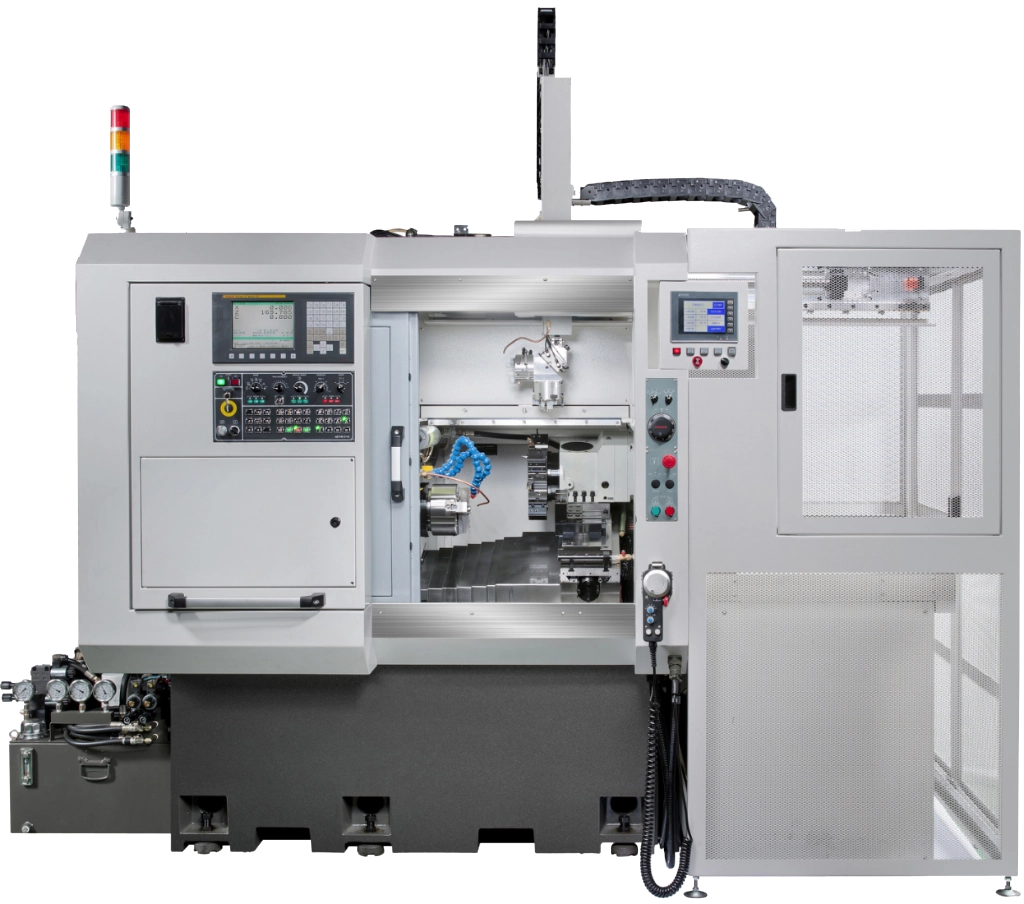
Gantry Robot Gantry Robot
AEGIS CNC Gantry Robot

Gantry robots mount on beam structures above the machine tool, freeing floor space in front of the machine — ideal for facilities with limited space that need to maintain maintenance access corridors. Cartesian coordinate motion makes path planning intuitive and movement fast. Provided structural rigidity is sufficient and thermal rise is controlled, stable repeatability is achievable. Note that long-span structures and rising machine heat may cause minor thermal beam displacement, affecting high-precision applications.

Best Application High-frequency, high-volume disc and sleeve-type part loading/unloading. Mass production environments with stable product types and low changeover requirements.

Limitations: The gantry robot's greatest weakness is limited flexibility. When product types change frequently, multi-machine collaboration is needed, or future process expansion is required, the Cartesian architecture is far less scalable than articulated robots, and gripper/fixture design is harder to adapt to diverse workpieces.
3
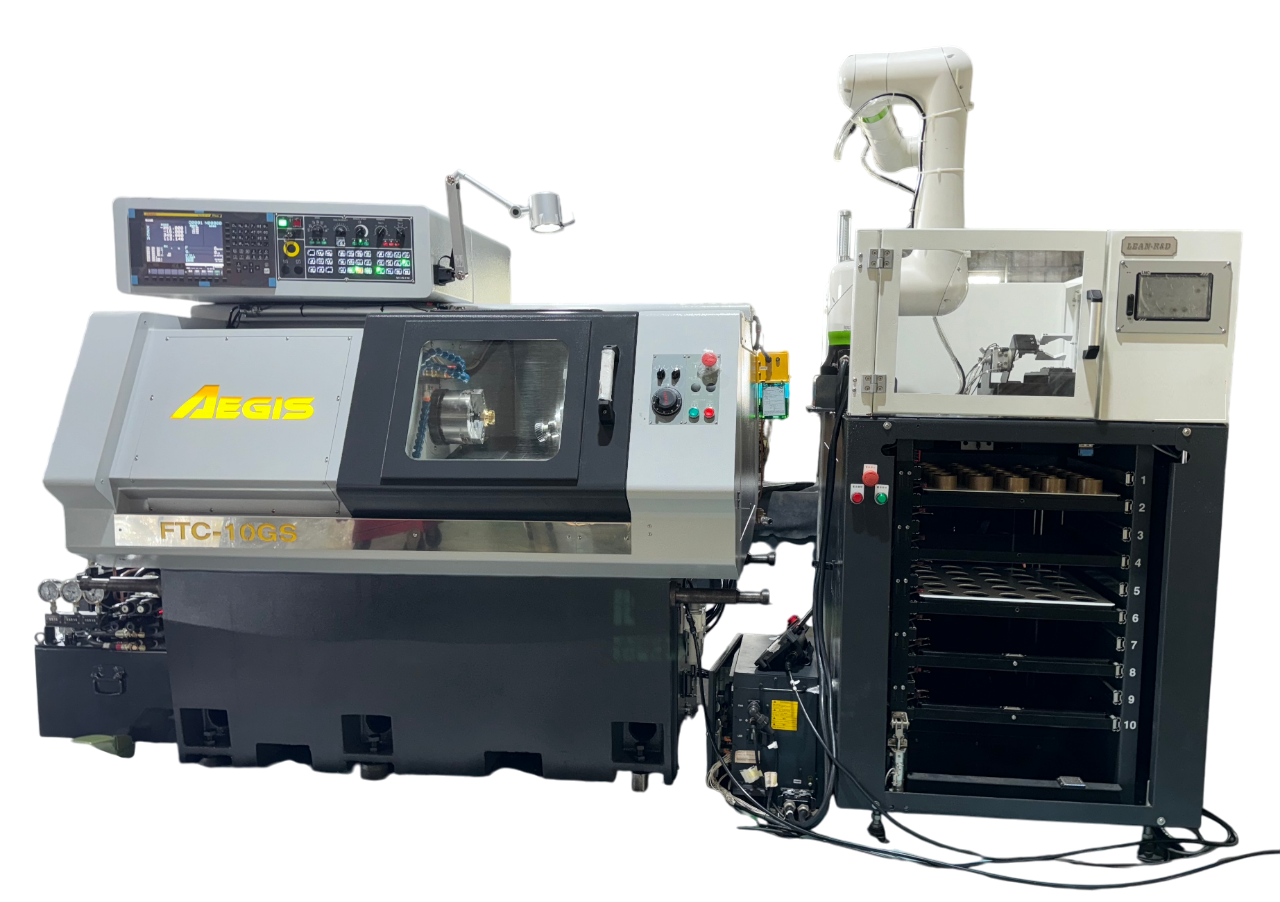
Articulated Robot Articulated Robot
AEGIS CNC Articulated Robot Arm

Articulated robots have six or more degrees of freedom with the highest motion flexibility, capable of workpiece flipping, cross-machine transfer, and integrating peripheral operations (air chip blowoff, flip-and-orient, inspection). For part feeding, they can be paired with trays, racks, conveyors, or vision systems (bin picking) — trays are not mandatory; select flexibly based on workpiece shape and batch size.

Best Application Non-bar irregular workpieces (hub components, cast/forged parts), complex processes requiring alternating A/B machine operations, or heavy workpiece loading/unloading.

Implementation Reality: Articulated robot effectiveness is highly dependent on system integration capability and gripper/fixture design. Implementation cost and setup time are typically the highest of the three solutions; the system integrator's capability directly determines final results and must be evaluated together with equipment selection.

Three-Solution Evaluation Dimension Comparison

Each of the three equipment types has strengths and weaknesses across key evaluation dimensions. There is no absolute "best solution" — only the choice best suited to current production line conditions. The following comparison table serves as a preliminary screening framework.

Evaluation Dimension Bar Feeder Gantry Robot Articulated Robot
Machining Flexibility Low
Only regular cross-section bar stock
Medium
Adjustable via fixture design
High
Handles diverse workpiece shapes
Changeover Speed Fast
Replace guide tube and chuck
Medium
Adjust gripper and program
Medium to Slow
Requires path replanning
Floor Space Behind machine
Longitudinal extension
Smallest footprint
Uses overhead beam space
Front or side of machine
Work envelope must be reserved
Automation Level Highest
Fully automated feed to collect
High
Requires part rack
Depends on integration
Determined by system completeness
Implementation Barrier Low
Mature standard product, easy to start
Medium
Requires integration with machine structure
High
Requires professional system integration development
Suitable Production Type High-volume continuous production
Stable product types
High-volume stable mass production
Fixed workpiece shapes
High-mix low-volume or complex processes
Variable workpieces or cross-machine needs
The Best Automation Is Not the Most Expensive Robot
It is the solution that keeps the machine spindle running all day — the core of selection is achieving perfect synchronization between equipment and production cycle time, not pursuing the highest specifications.

Real-World Scenarios: Choose the Right Equipment to Maximize Production Capacity

No matter how clear the selection logic, real scenarios are always more convincing. The following two typical cases illustrate the consequences of wrong selection and the key basis for correct decisions.

Scenario A
Continuous Shaft Component Production
Workpieces are long bar stock requiring continuous parting and sequential multi-operation machining. Using an articulated robot for bar feeding would face unstable center-of-gravity issues and limited feed travel; bar wobble could directly affect machining accuracy and clamping safety.
Best Solution: Bar Feeder — automatic feeding, precise positioning, continuous unmanned operation. The most stable efficiency choice for continuous long-bar machining scenarios.
⚠ Cost of Wrong Choice: Using an articulated robot for long bar feeding causes high clamping failure rates from bar center-of-gravity offset. Line shutdown frequency far exceeds expectations — automation becomes the production bottleneck.
Scenario B
Hub Components, Gear Parts & Irregular Workpiece Machining
These workpieces cannot use bar feeders and require robot arm single-piece loading/unloading. The key decision factor is process complexity. If the operation is simply loading/unloading with a short cycle time, a gantry robot's travel speed and positioning stability is sufficient, with lower maintenance costs. If the process requires adding air chip blowoff, workpiece flipping, or moving parts to a second machine for secondary operations, the articulated robot's multi-axis flexibility can integrate these steps, creating higher unmanned operation value.
Key Decision Factors: Process complexity + cycle time + future expansion requirements — these three factors together determine whether a gantry or articulated robot is more appropriate.
⚠ The High-Mix Trap: If product types change frequently but a gantry robot is mistakenly selected, gripper changeover and program calibration time costs will quickly consume the automation gains — changeover time becomes longer than manual operation.

Four Conditions to Verify Before Implementing Automation

Automation implementation is not about pursuing equipment grades; it is targeted reinforcement based on existing production line logic. Before making equipment decisions, confirm the following four key conditions — any mismatch will significantly reduce the overall system's effectiveness.

Condition 1
Workpiece Initial Form
Bar stock, block material, or cast/forged parts — the workpiece's condition from raw material to just before the machine directly determines which type of automation equipment is viable. Ignore this premise and even the best equipment cannot be successfully implemented.
Condition 2
Machining Cycle Time
The automation equipment's loading/unloading speed must match the machine's cycle time. If the robot is far faster than the machine, equipment sits idle most of the time; if the machine waits for the robot, capacity is constrained. Measure your workpiece's cycle time before evaluating.
Condition 3
Floor Space and Traffic Flow Planning
Tool changes, daily maintenance, troubleshooting — all require personnel access to the machine. Automation peripherals must not obstruct normal maintenance traffic flow; otherwise subsequent maintenance costs will increase dramatically.
Condition 4
Process Stability and Chip Evacuation Capability
Automation's greatest enemy is process instability: dimensional drift, inconsistent burrs, positioning errors — all cause repeated robot pick failures and full-line stoppages. Additionally, operators can manually blow away chips during manual operation, but in unmanned operation, chips remaining on gripper or workpiece datum surfaces will cause indentation or clamping eccentricity on the next part. Confirm before implementation that equipment has gripper air blowoff or face cleaning functions — this is the key to whether unmanned operation can run stably for more than 4 continuous hours.

AEGIS CNC / EXPERT CONSULTATION

Planning to Automate Your CNC Production Line?

From workpiece assessment to equipment selection, the AEGIS technical team offers free one-on-one consultation to help you find the most cost-effective automation implementation solution and avoid resource waste from wrong selection.