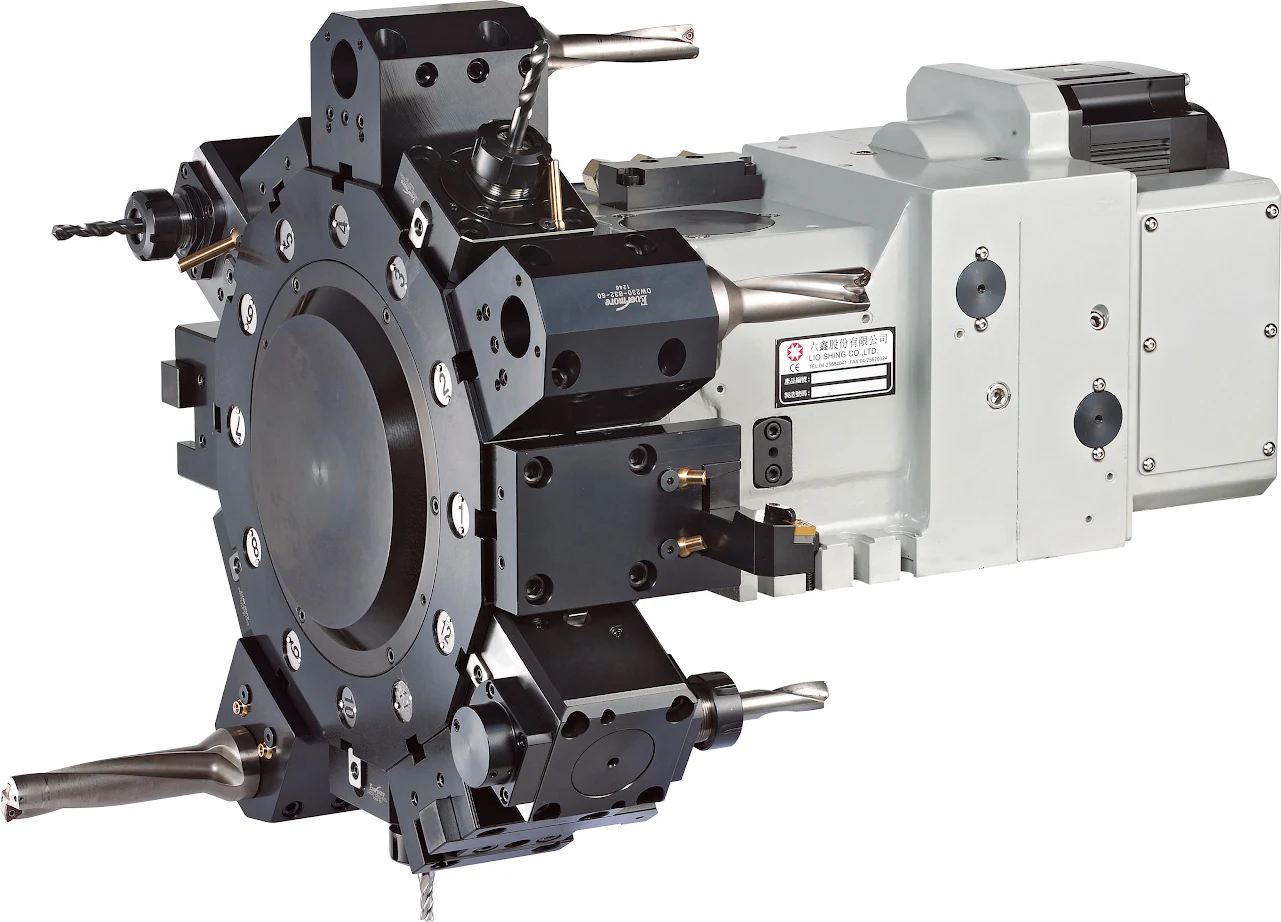
Vertical CNC Lathe — spindle perpendicular to the ground. The workpiece "stands upright" and is fixed to a circular rotary table. Gravity assists clamping rather than causing deflection, making it ideal for machining large-diameter discs, heavy ring components, and other short, heavy workpieces.
Horizontal CNC Lathe: The Workhorse of General Manufacturing
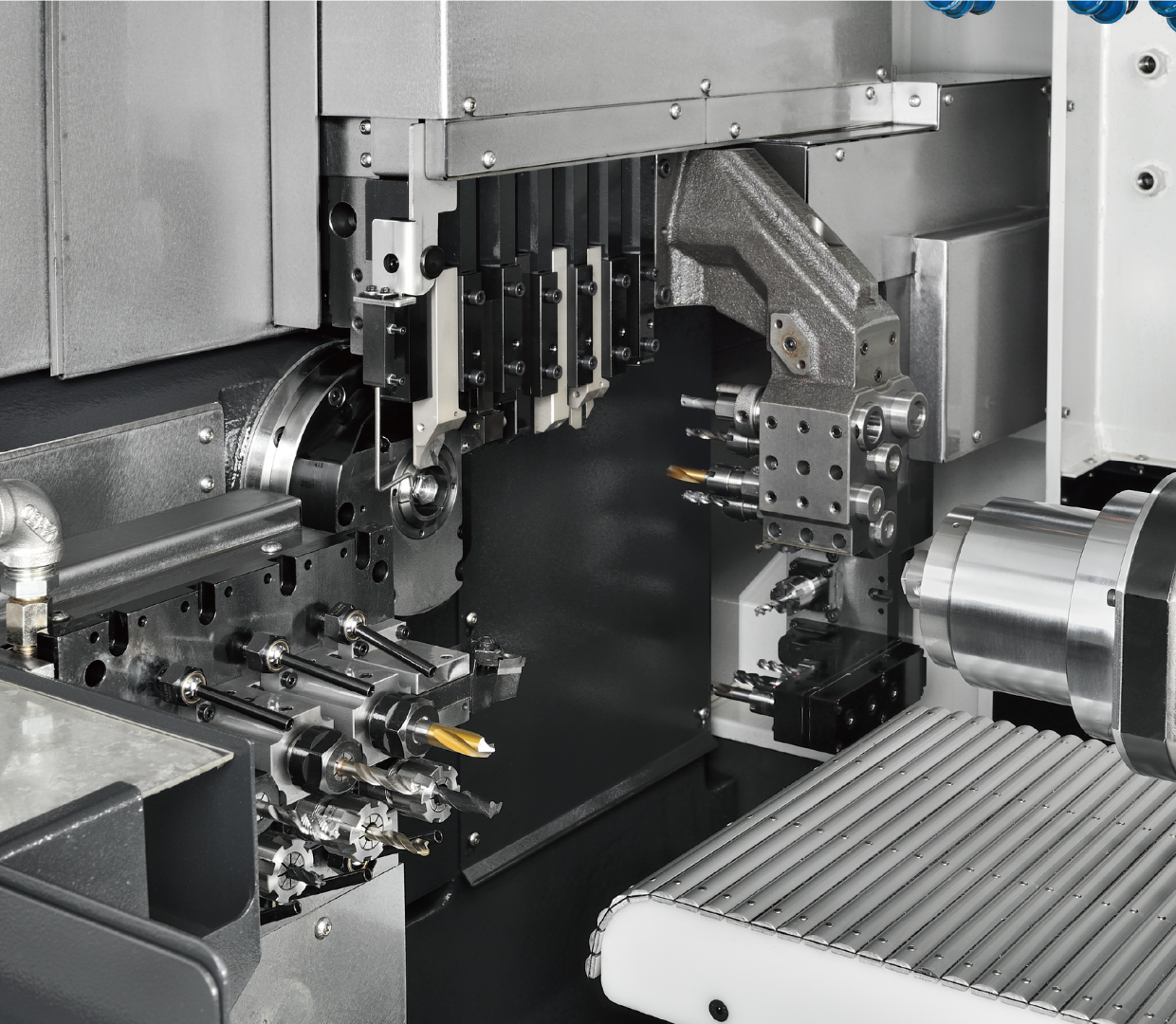
The horizontal CNC lathe is currently the most widely used form of CNC lathe. With the spindle mounted horizontally, the chuck grips the workpiece and it rotates laterally in the air while the turret moves on X/Z axes to cut.
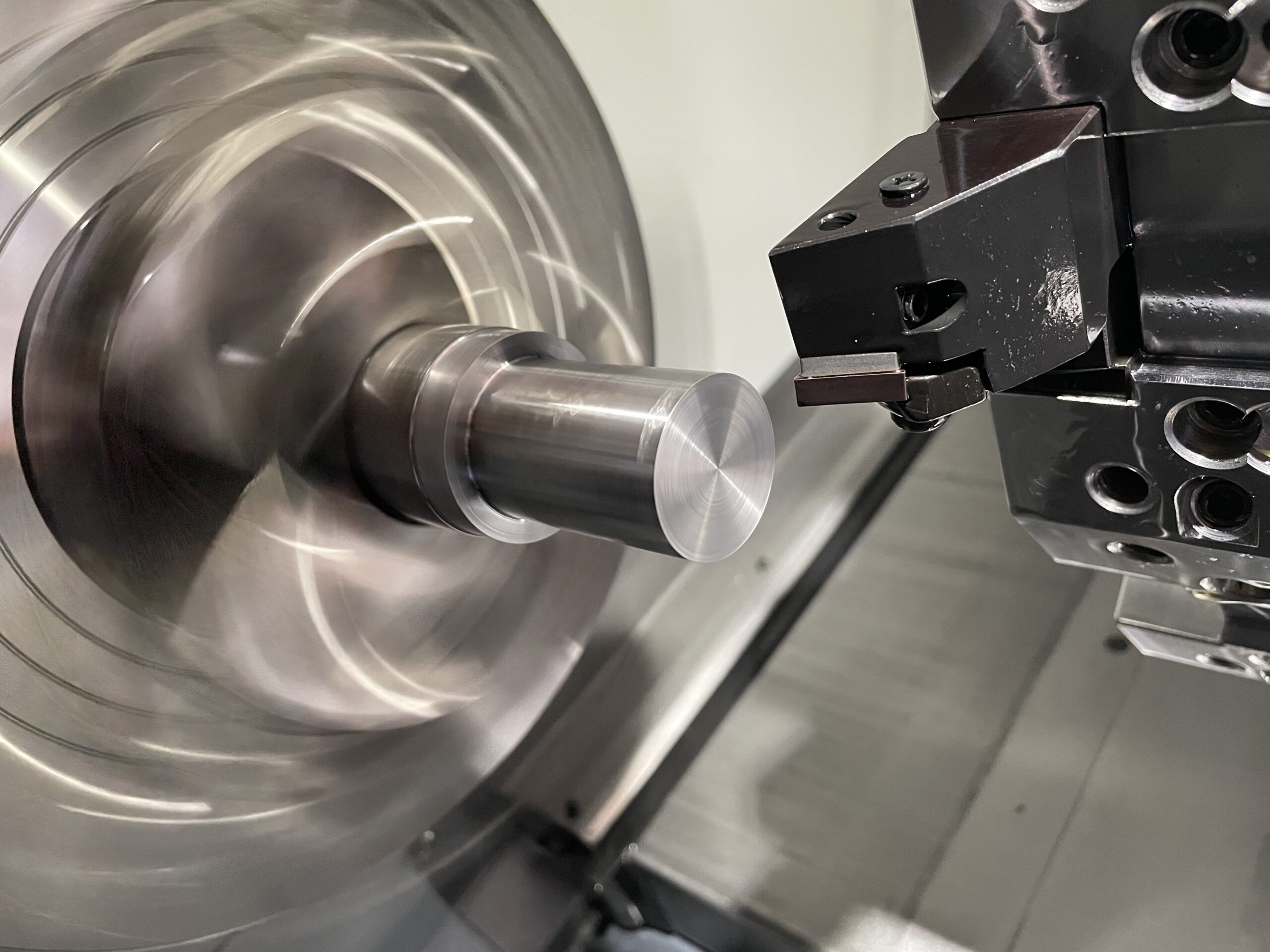
Horizontal lathe chuck rotation and cutting tool in operation
- Excellent chip evacuation: Chips fall naturally by gravity without accumulating, protecting surface finish and extending tool life
- First choice for long shaft parts: With tailstock support, longer shaft components can be machined stably
- High automation flexibility: Easily integrated with bar feeders and robot arms for high-volume continuous production
- Intuitive operation: Straightforward structure — operators can observe machining while standing, with easy maintenance access
- Notes: Heavy, large-diameter workpieces are affected by gravity during clamping and may experience downward deflection over long machining runs
Vertical CNC Lathe: The Specialist for Large and Heavy Workpieces
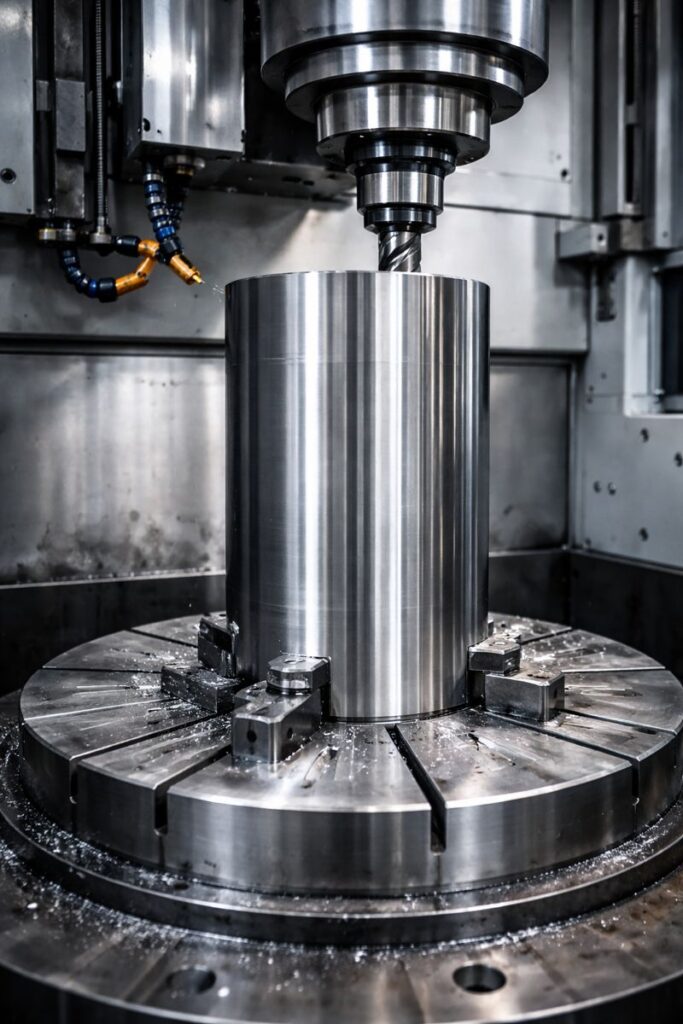
The vertical CNC lathe (also called a "vertical turning center") has a vertically oriented spindle. The workpiece is placed upright on a circular rotary table. This design turns gravity from an enemy into an ally — the heavier the workpiece, the more stable the clamping.
- Extremely stable clamping: Gravity-assisted clamping means large, heavy workpieces do not deflect from hanging, achieving higher roundness
- First choice for large disc parts: Flanges, ring components, large gears — machining accuracy far exceeds horizontal lathes
- Convenient loading/unloading: Overhead crane lowers workpiece directly onto the rotary table — handling heavy parts is safer and less laborious than on a horizontal lathe
- Better floor-space efficiency: The machine develops vertically rather than horizontally — the same machining capacity requires a smaller footprint
- Notes: Chips do not fall naturally — coolant flushing is needed for chip evacuation, slightly increasing maintenance costs
Horizontal vs Vertical: Five Key Differences at a Glance
The fundamental difference between the two lathes comes from spindle orientation, which in turn affects chip evacuation, clamping, suitable workpieces, and shop floor layout. Here are five dimensions compared in full:
| Comparison Item | Horizontal CNC Lathe | Vertical CNC Lathe |
|---|---|---|
| Spindle Orientation | Parallel to ground — workpiece rotates "lying on its side" | Perpendicular to ground — workpiece rotates "standing upright" |
| Effect of Gravity | Heavy parts suspended in air may deflect — deflection must be managed | Directly supports the workpiece — actually helps stabilize clamping |
| Chip Evacuation | Chips fall naturally — excellent evacuation efficiency | Requires coolant flushing — lower evacuation efficiency |
| Suitable Workpieces | Shafts, bar stock, small-to-medium disc parts | Large-diameter discs, heavy ring components, flanges |
| Floor Footprint | Extends horizontally — larger floor area | Extends vertically — same capability with smaller footprint |
How to Choose? The Workpiece Decides Everything
Horizontal and vertical lathes each excel in their own application scenarios. The key to machine selection is your workpiece's shape, size, and weight. Two scenarios to help you decide quickly:
AEGIS CNC's product line is centered on horizontal turning centers, covering High-Precision, High-Rigidity, Turn-Mill, and other series. If your workpiece requirements span both machine types, our technical team can conduct a more precise machine selection analysis based on your actual part drawings.