What Is a Box Way / Hardened Slideway?
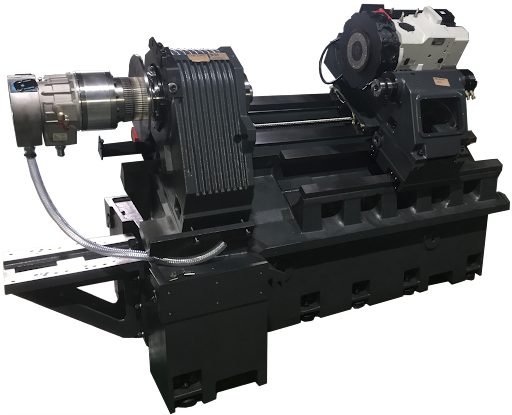
Box Way / Hardened Slideway, also known as a "sliding guideway," is the most traditional structure in machine tools — and the one that best reveals a manufacturer's craftsmanship level.
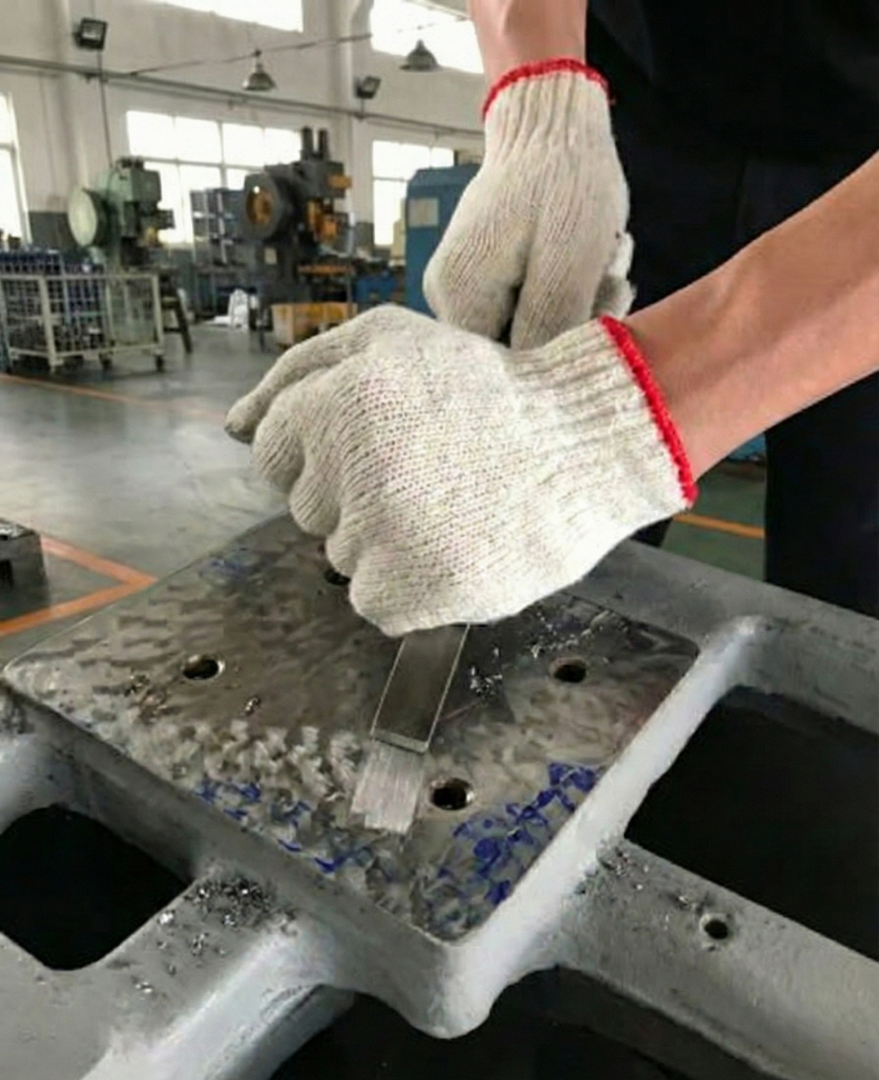
Operating Principle: Box Way / Hardened Slideway is cast directly into the machine's cast iron bed, then hardened via induction heat treatment (quenching) and precision ground, allowing the saddle to "slide" directly on the surface. This surface-contact friction method has a large contact area and inherently excellent vibration absorption.
-
Ultimate Rigidity & Vibration DampingLarge surface contact area effectively absorbs intense vibrations during cutting, providing rock-solid stability when machining cast iron, forgings, and other difficult materials.
-
Ideal for Heavy & Interrupted CuttingInterrupted cutting (e.g., hex bar stock) delivers strong shocks to the guideway. Box Way / Hardened Slideway demonstrates stability that Linear Guideway cannot match.
-
Long Service LifeWith proper lubrication maintenance, Box Way / Hardened Slideway is highly wear-resistant and machines can last for decades.
-
Slower Traverse SpeedHigh friction resistance; rapid traverse typically 15–20 m/min. Not suitable for production lines chasing minimal cycle times.
-
Low-Speed Stick-SlipAt very low feed rates, the difference between static and dynamic friction may cause slight stick-slip behavior, affecting ultra-precision surfaces.
-
Relies on Lubrication SystemRequires a well-maintained auto-lubrication system. Clogged or oil-starved lines will cause rapid guideway wear or scoring.
What Is a Linear Guideway?
Linear Guideway, also known as a "rolling guideway," is the mainstream configuration for modern high-speed machine tools.
Operating Principle: Balls or rollers installed inside the saddle block roll between the rail and the saddle. This point-contact or line-contact friction method has a friction coefficient only 1/20 to 1/50 that of Box Way, enabling remarkably high rapid traverse speeds.
-
High-Speed TraverseUp to 30 m/min and beyond, dramatically reducing non-cutting time — the first choice for minimizing cycle time.
-
High Positioning AccuracyNo stick-slip effect, highly responsive. Micro-increment feeds (e.g., 0.001 mm) are very precise, ideal for high-accuracy surface machining.
-
Easy Replacement & MaintenanceModular components: replace the whole unit when worn. No need for re-scraping and grinding as with Box Way. Lower maintenance cost.
-
Energy SavingLower drive torque requirements. Long-term savings on electricity costs in high-volume production environments.
-
Weaker Vibration DampingSmall point/line contact area absorbs heavy-cutting vibrations less effectively than Box Way. Appropriate cutting parameters are recommended.
-
Crash Damage RiskIn a severe machine crash, balls can dent the rail, rendering the entire linear guide unit unusable. Repair costs are relatively high.
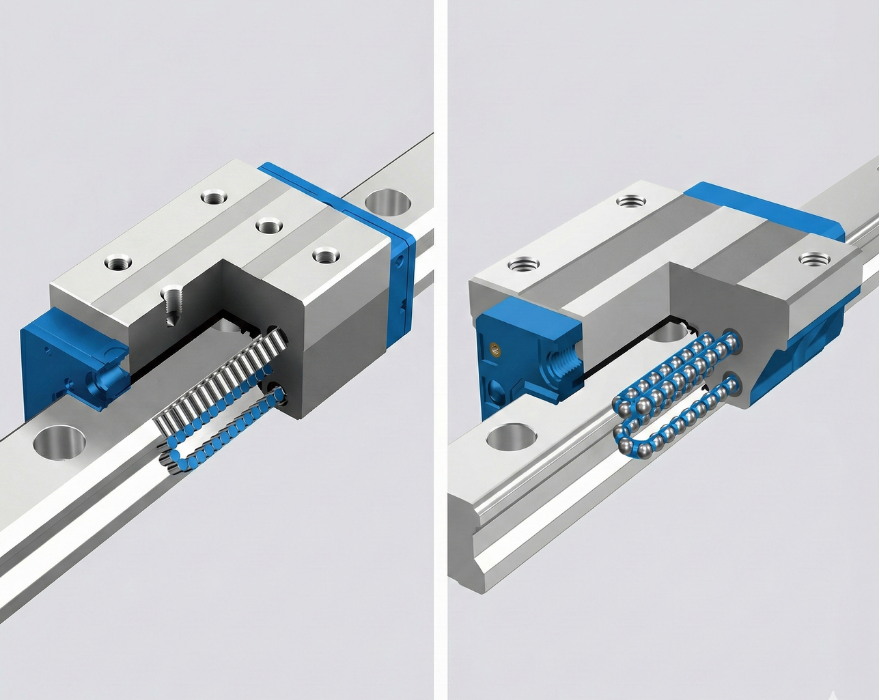
Linear Guideway Sub-types: Ball Type vs. Roller Type
Many customers are familiar with linear guideways but are unaware they are further divided into "ball" and "roller" types, which differ significantly in rigidity and speed:
Contact form: "point." Fastest speed, lower cost — the mainstream configuration for high-speed precision machining.
- Fastest speed, exceeding 30 m/min
- Lowest friction coefficient, extremely high positioning accuracy
- Suitable for aluminum alloy, copper, plastic, and other light-cutting materials
- Ideal for high-speed contour machining of electronic components and precision instruments
Contact form: "line." The best hybrid of Box Way and Linear Guideway — retaining the high-speed advantage while adding rigidity through cylindrical line contact.
- Significantly higher rigidity than ball type; approaches moderate heavy-cutting capability
- Still far faster than Box Way (25–35 m/min)
- Suitable for general steel, stainless steel, and other medium-difficulty materials
- Adopted by many high-end machine models for balanced speed and rigidity
How to Choose the Right Guideway Configuration?
There is no absolute right or wrong in guideway selection — it depends on your machining requirements. The following six-dimension comparison will help you make a quick decision:
| Recommended For | Box Way / Hardened Slideway(Box Way) | Linear Way |
|---|---|---|
| Workpiece Material | Steel, cast iron, stainless steel, forgings | Aluminum alloy, copper, general steel, plastics |
| Cutting Method | Heavy cutting, interrupted cutting (e.g., hex bar) | Light cutting, finishing, high-speed contour machining |
| Production Type | High-volume stable parts, maximizing machine lifespan | Mass production, electronic components, minimizing cycle time |
| Precision Requirements | Excellent dimensional stability (thermal deformation resistance) | High surface finish, superior repeatability |
| Maintenance Cost | Requires regular lubrication; higher maintenance skill threshold | Low lubrication requirements; modular replacement is convenient |
| Typical Machine Types | Heavy-duty horizontal CNC lathe, traditional precision CNC lathe | High-speed precision CNC lathe, Turn-Mill Center |
Based on the comparison above, the following three purchasing recommendations will help you narrow your choice:
-
1Prioritize Material and Cutting Conditions If you primarily machine cast iron, forged steel, or require heavy interrupted cutting, Box Way machines are the first choice. If you mainly finish aluminum alloy, copper, or general carbon steel, linear way machines offer better speed and precision.
-
2Consider the Importance of Cycle Time If production volume is high and non-cutting travel time is significant, the high-speed traverse of linear way can dramatically improve output. Box Way machines are better suited for scenarios where per-pass stability matters more than speed.
-
3Use Roller-Type Linear Guideway as a Compromise If your workpiece materials fall between light and heavy (e.g., general carbon steel, stainless steel), roller-type linear guideway is the best compromise between speed and rigidity — a configuration adopted by many AEGIS high-end models.