The Critical Role of the Controller in a CNC Lathe
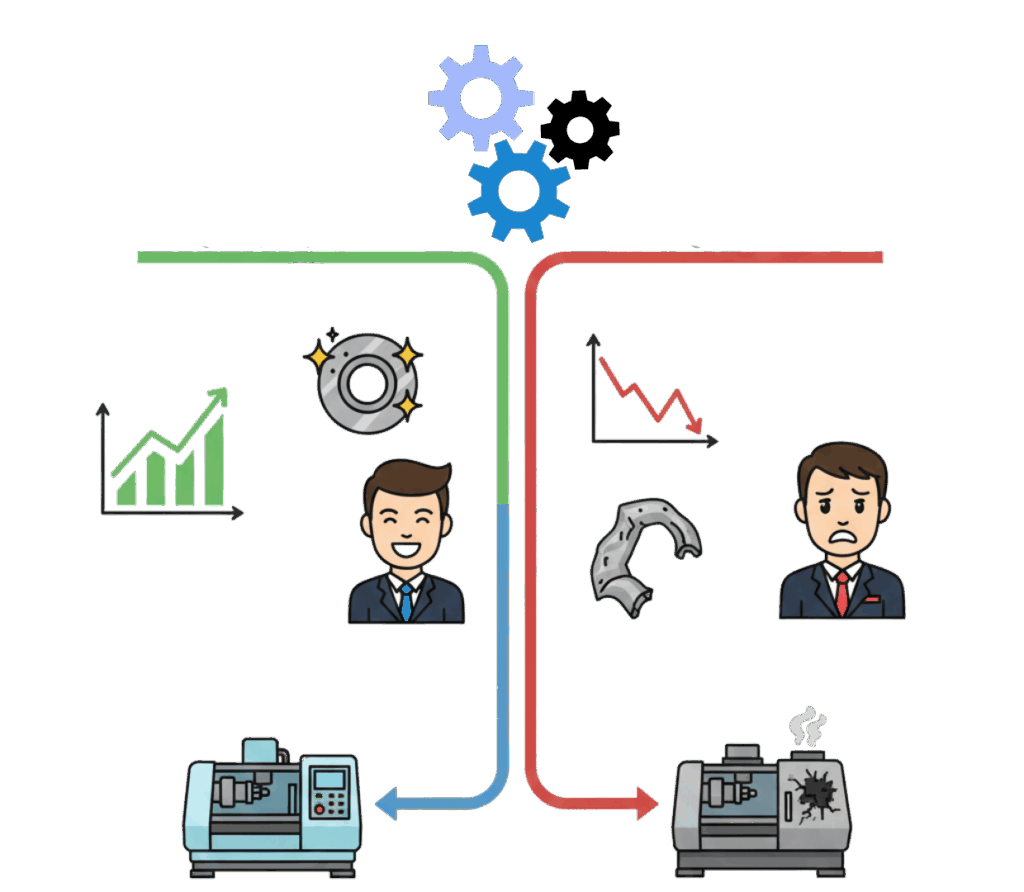
The controller's influence far exceeds what most people imagine. It determines three core capabilities:
-
Ultimate Computing PowerDuring high-speed cutting or complex surface machining, the controller must "look ahead" hundreds of program lines to pre-calculate deceleration points. The faster the brain's response, the smoother the machine runs and the finer the machined surface.
-
Servo Loop ControlThe controller not only issues commands but must also receive motor feedback signals in real time. When cutting resistance increases, it instantly commands the motor to compensate — this determines dimensional stability and precision consistency.
-
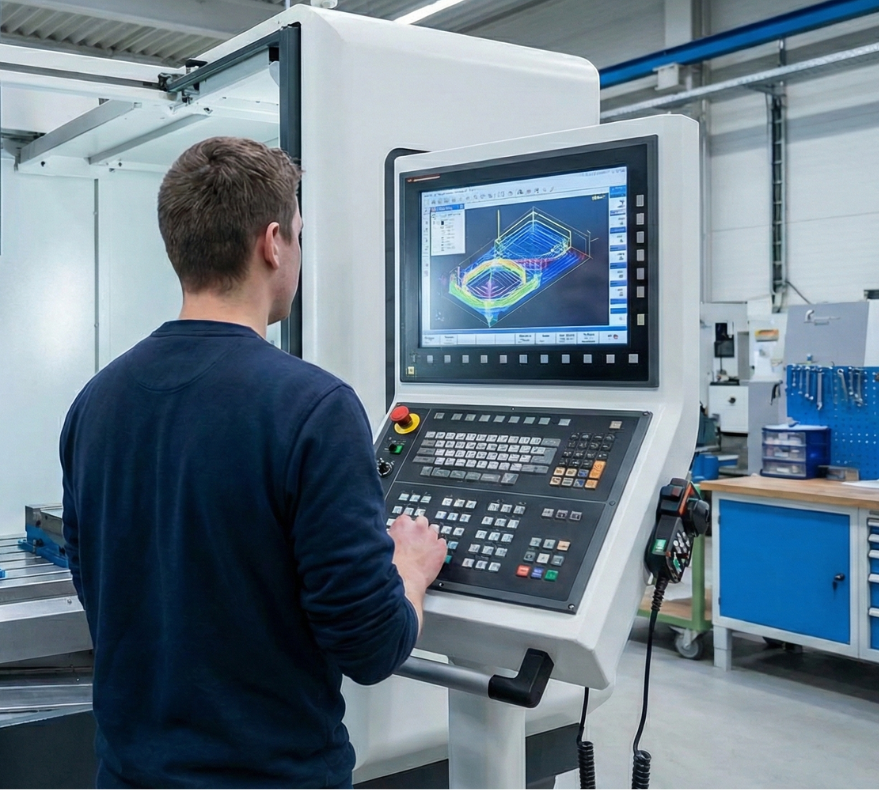
Conversational Operating InterfaceThis is the screen operators face every day. A user-friendly controller enables even G-code beginners to get up to speed quickly through a graphical conversational interface, reducing training costs.
Analysis of the Four Mainstream Controller Brands
The mainstream CNC controller brands each excel in different areas and markets. Here is an analysis of each:
Known as the "Yellow Giant," FANUC holds the #1 global machine tool market share. "Durability" and "stability" are its defining characteristics.
- Extremely low failure rate, industry benchmark for durability
- Most familiar to operators worldwide; easiest for hiring trained staff
- After-sales service network spans the globe; parts supply guaranteed for decades
A fierce rival to FANUC in Asian markets, especially acclaimed in the mold industry and high-speed machining. Its renowned SSS control technology makes surface machining smoother.
- SSS control technology for exceptional speed and smoothness on complex surfaces
- Extremely responsive servo motors with strong instantaneous acceleration/deceleration
- Operating logic and G-code format highly similar to FANUC; low transition barrier
The top choice for high-end European machine tools, with a particularly strong position in aerospace and 5-axis machining. The ShopTurn graphical interface makes complex workpiece programming more intuitive.
- ShopTurn conversational programming: view graphics and fill in values to machine
- Open architecture allows deep customization of interfaces and functions
- Exceptional mathematical computing for multi-axis simultaneous motion (5-axis, turn-mill)
The highest market share PC-Based controller in Chinese-speaking markets. Its greatest competitive strengths are cost-effectiveness and excellent automation integration capability.
- Competitive pricing, effectively reduces machine procurement costs
- PC architecture easily interfaces with automation equipment and robot arms
- Full Chinese interface; operators learn quickly, low training costs
Controller Brand Characteristics Comparison
A quick comparison of the four brands across four core dimensions:
| Comparison Item | FANUC | Mitsubishi | SIEMENS | SYNTEC |
|---|---|---|---|---|
| Stability | Extremely high, industry benchmark | High, Japanese quality | High, European craftsmanship | Good, continually improving |
| Learning Curve | Easiest, universally familiar | Easy, similar to FANUC | Requires retraining | Easy, full Chinese/multilingual interface |
| After-Sales Service | Most comprehensive, global network | Comprehensive, convenient in Asia | Comprehensive, European-oriented | Strong local Taiwan support |
| Automation Integration | Standard, requires customization | Good | Open architecture, highly flexible | Strongest, PC architecture advantage |
How to Choose the Right Controller?
There is no "best" controller — only the one that best fits your shop's needs. The following four considerations will help you narrow your choice:
-
1Prioritize Your Operators' Familiarity If operators are accustomed to Japanese-style interfaces (FANUC / Mitsubishi), transitioning to a European system (SIEMENS) will involve a painful adjustment period. FANUC is the most conservative, low-risk choice — nearly all experienced machinists can operate it.
-
2Complex Parts, No Powerful CAM Software → SIEMENS For complex surfaces and multi-axis machining without powerful CAM software support, SIEMENS ShopTurn conversational programming lets programmers set up complex workpieces quickly, directly on the machine.
-
3Prioritizing Logistics & Long-Term Service Support → FANUC FANUC has the most comprehensive global technical support network with parts supply guaranteed for decades. For shops requiring stable long-term production, this is the best choice for minimizing service risk.
-
4Budget-Conscious or Needing High Automation Integration → SYNTEC SYNTEC's PC architecture is naturally suited for connecting robot arms, automation equipment, and IoT networks. Combined with its multilingual interface and competitive pricing, it is the cost-effective choice for automated production lines.
AEGIS CNC machines are primarily configured with FANUC and Mitsubishi controllers. SIEMENS and SYNTEC can also be specified based on customer requirements — contact our technical team to discuss the configuration that best suits your shop environment.