How the AEGIS CNC Tailstock Works
When discussing CNC lathe construction, most people focus only on the spindle and turret, overlooking the seemingly unremarkable Tailstock sitting opposite the spindle.
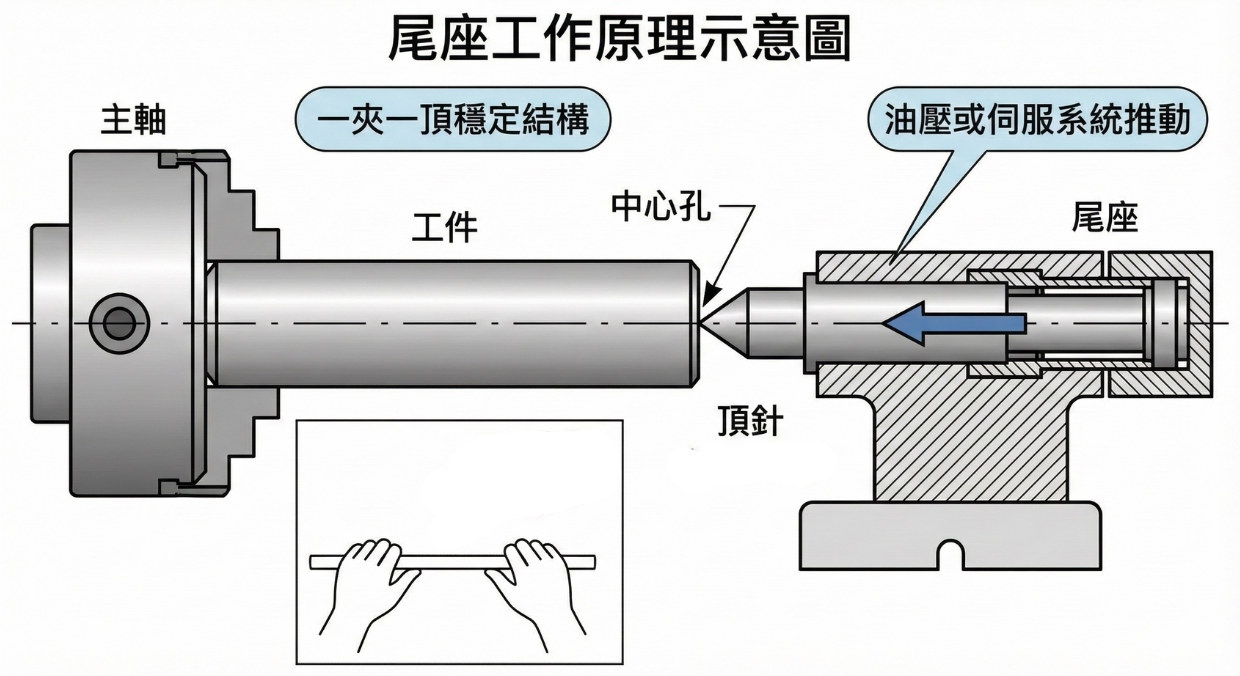
Imagine holding a long rod with both hands: if only your left hand grips one end (the spindle chuck) while your right hand is free, the other end will wobble. The Tailstock is that "right hand" — using internal hydraulics or a servo system to push the center out from the front end, pressing against the workpiece center hole to form a stable "chuck-and-center" structure.
The Tailstock centerline must precisely coincide with the spindle centerline — this is the fundamental prerequisite for machining accuracy. Any deviation will be directly reflected in workpiece dimensions, causing taper errors.
Three Core Functions of the Tailstock
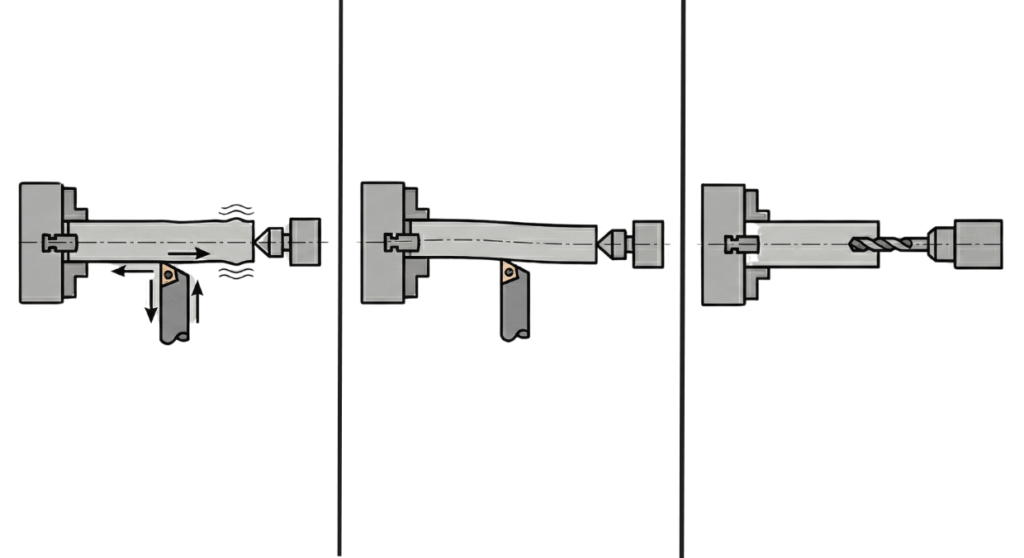
The Tailstock plays three irreplaceable roles in CNC lathe machining, each directly affecting workpiece quality and precision:
Manual Hydraulic vs. Programmable Tailstock: How to Choose?
Tailstocks are divided into two main types by control method, each with advantages in automation level and operational flexibility:
The most common standard equipment. The Tailstock body must be manually moved via the drive lever, positioned by Z-axis travel, then hydraulic pressure pushes the quill out to support the workpiece.
- Simple structure, durable, low failure rate
- Lower cost, easy to maintain
- Slower positioning, requires manual operation
- Low automation level, not suitable for unmanned production lines
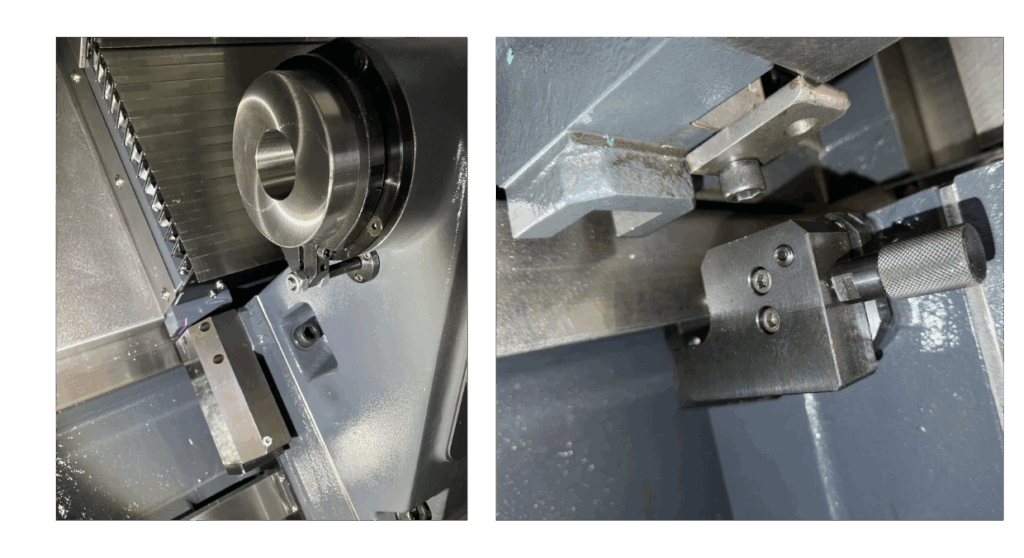
Tailstock quill extension and retraction can be programmed: M-codes control quill movement, G-codes control travel position, and positioning is completed fully automatically.
- Fast, precise positioning with programmable control
- Auto-positioning — the preferred choice for automated production lines
- Compatible with Bar Feeder for fully unattended machining
- Higher cost, more complex structure
Center Specification Guide
The center is the key component at the front of the Tailstock that directly contacts the workpiece center hole. Modern CNC lathes almost universally use Live Centers. The most important factor when purchasing is confirming the Morse Taper specification.
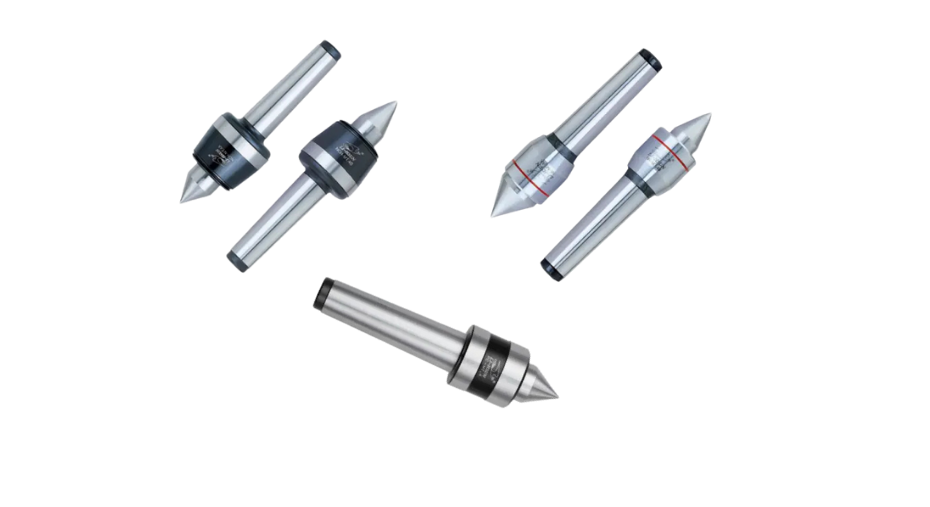
Three Advantages of Live Centers:
-
Suitable for High SpeedsBuilt-in precision bearings at the tip allow the center to rotate with the workpiece, eliminating relative friction and heat buildup. Modern high-speed models can exceed 6,000 RPM.
-
High DurabilityBecause it rotates with the workpiece, it does not wear the workpiece center hole. Service life is far longer than a Dead Center.
-
Handles Heavy Cutting LoadsThe internal bearing design can withstand larger radial cutting forces, making it suitable for heavy-duty cutting.
Morse Taper Specification Reference:
| Morse Taper | Applicable Machine Type | Description |
|---|---|---|
| MT3 | Small CNC Lathe | For small CNC lathes or benchtop CNC lathes |
| MT4 | Mid-Size CNC Lathe | Most common specification, suitable for most standard horizontal CNC lathes |
| MT5 | Heavy-Duty CNC Lathe | For large heavy-duty CNC lathes; larger taper shank provides stronger clamping force |
⚠️ Before purchasing a center, always verify the Morse Taper specification of your machine's Tailstock bore. Mismatched sizes cannot be installed.