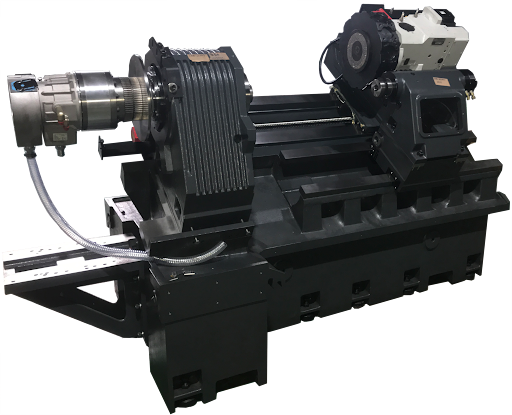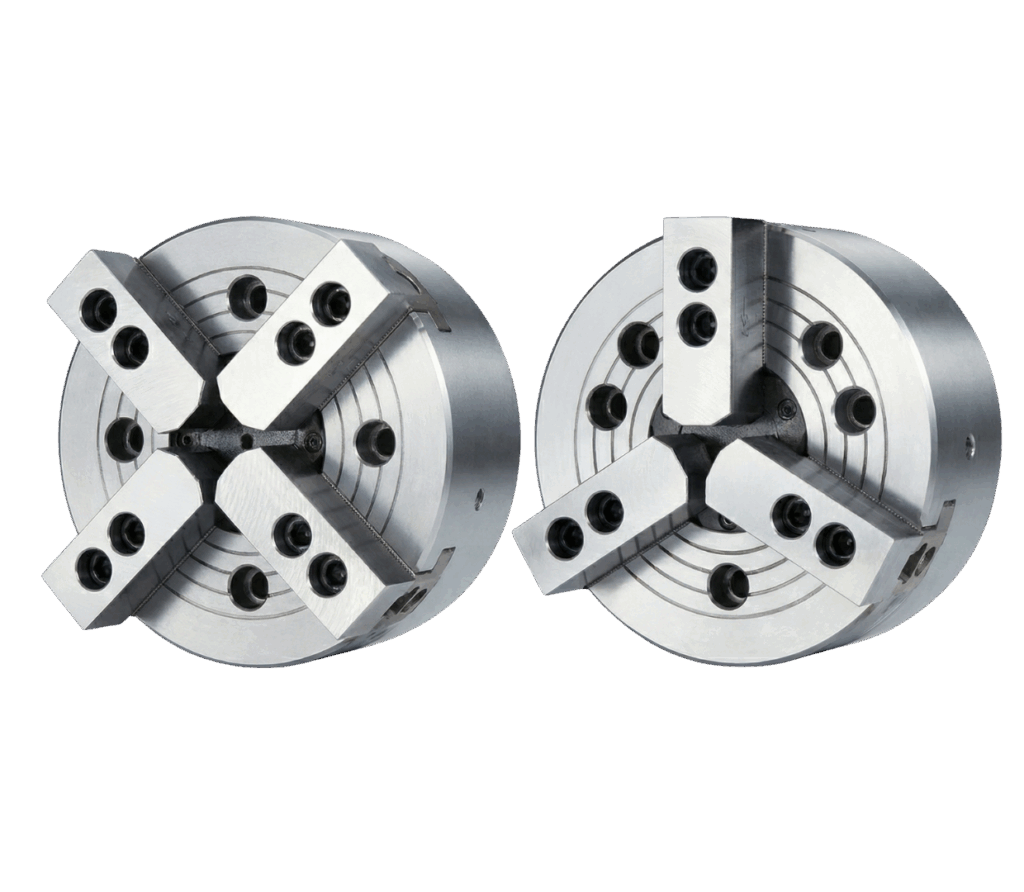
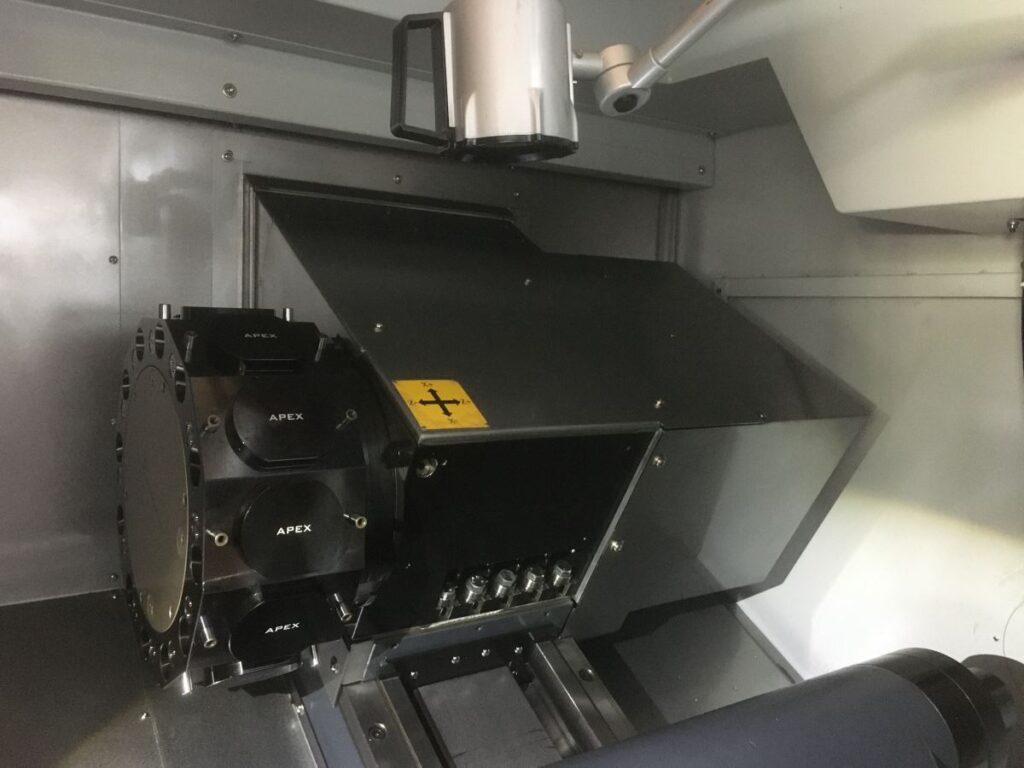
BMT Turret System (Base Mounted Tooling)
Face-clamping design. The BMT toolholder contacts the turret face with a large flat surface and is locked by 4 bolts with locating keys. The large contact area provides stable, rigid positioning — the dominant configuration in today's high-rigidity turn-mill centers.
Structural principle: The holder base and turret face share "face-to-face" large-area contact. Locating keys prevent rotational displacement while 4 bolts apply uniform clamping force. This design makes the toolholder and turret disc virtually one piece — cutting forces transfer directly through the flat surface to the turret disc without any lever-arm effect.
- Ultimate rigidityLarge flat contact creates a monolithic feel; outstanding vibration damping under heavy cutting and powerful milling
- Direct power transmissionShort, direct drive path; enables aggressive milling comparable to a machining center in turn-mill operations
- High repeatabilityFlat-surface positioning is stable; tool re-registration error is minimal, ensuring reliable machining accuracy
- Longer tool-change timeRequires tightening 4 bolts; changeover takes more time than VDI — not ideal for applications requiring frequent tool swaps
- No center-height micro-adjustmentThe dual-surface locating design means that if the turret disc is knocked out of alignment, the toolholder cannot be individually corrected — the turret itself must be repaired. This also means BMT machines demand extremely high manufacturing precision.
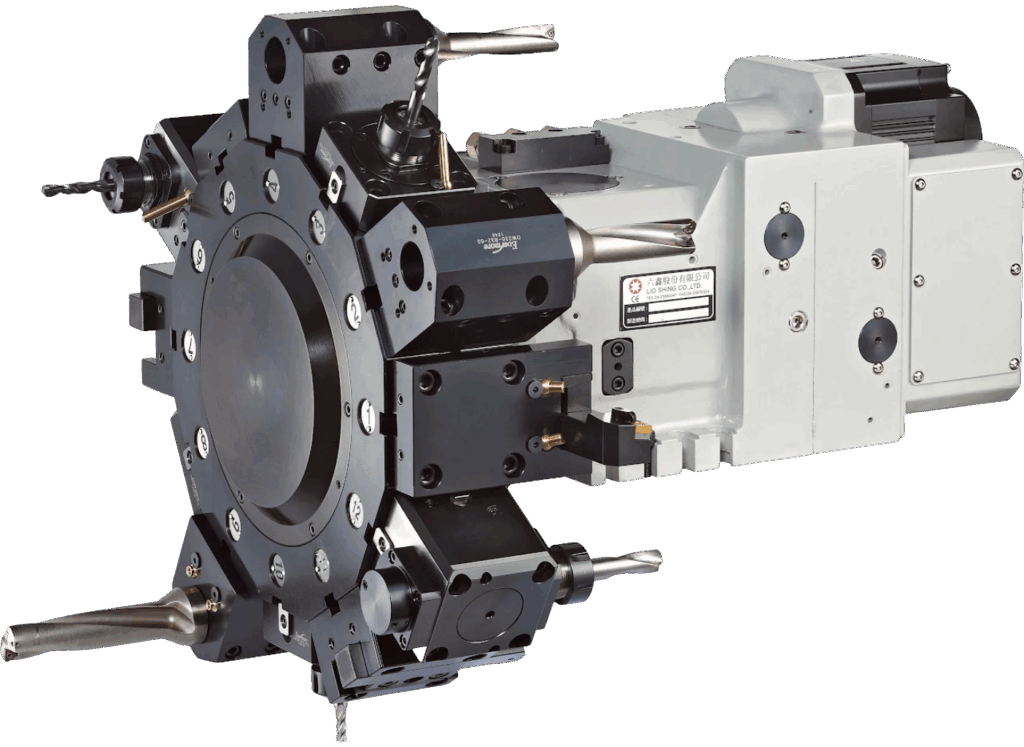
VDI Turret System (Verein Deutscher Ingenieure)
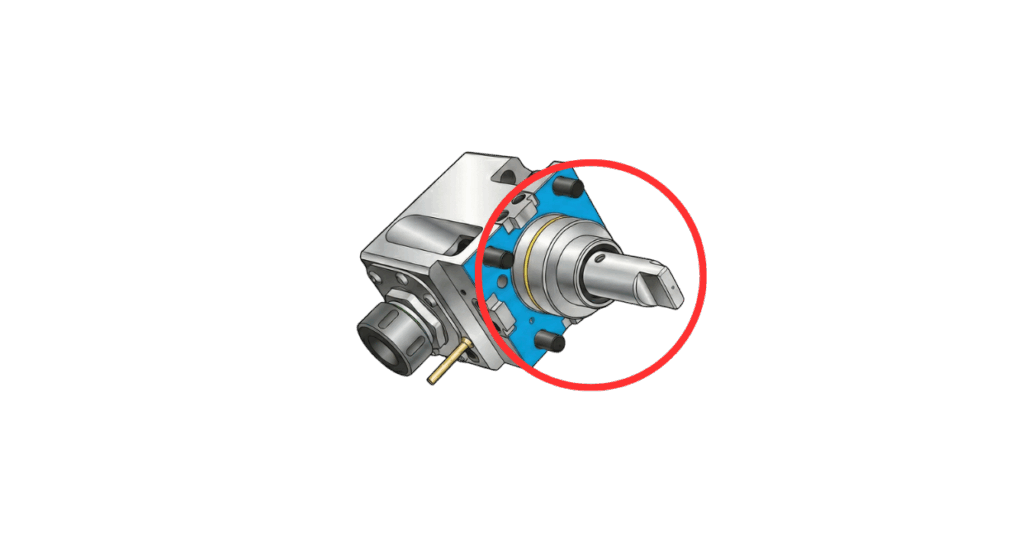
Cylindrical shank insertion design. VDI originates from the German Engineers' Association (Verein Deutscher Ingenieure) standard and was the dominant European machine tool configuration for decades. The holder features a serrated cylindrical shank at its rear that inserts into the turret disc bore and is clamped by a wedge block with a single bolt.
Structural principle: The cylindrical shank slides into the bore in the turret disc. A side-mounted wedge block applies clamping force — only one bolt tightening is needed to complete fixation. The serrated surface provides anti-slip positioning, and tool changes are fast and smooth.
- Fast tool changeSingle-bolt operation; quick changeover suits high-mix production environments requiring frequent tool swaps
- Center-height micro-adjustmentThe cylindrical shank allows slight angular correction; individual toolholder adjustment after collision, providing high maintenance flexibility
- Wide range of toolholdersMature international standard with high cross-brand interchangeability; easy sourcing and broad selection
- Lower rigiditySmall cylindrical contact area and long lever arm — prone to micro-vibration under heavy cutting, affecting surface quality
- Lower power transmission efficiencyThe drive shaft undergoes multiple direction changes; the longer transmission path generates more vibration and heat, limiting milling capability
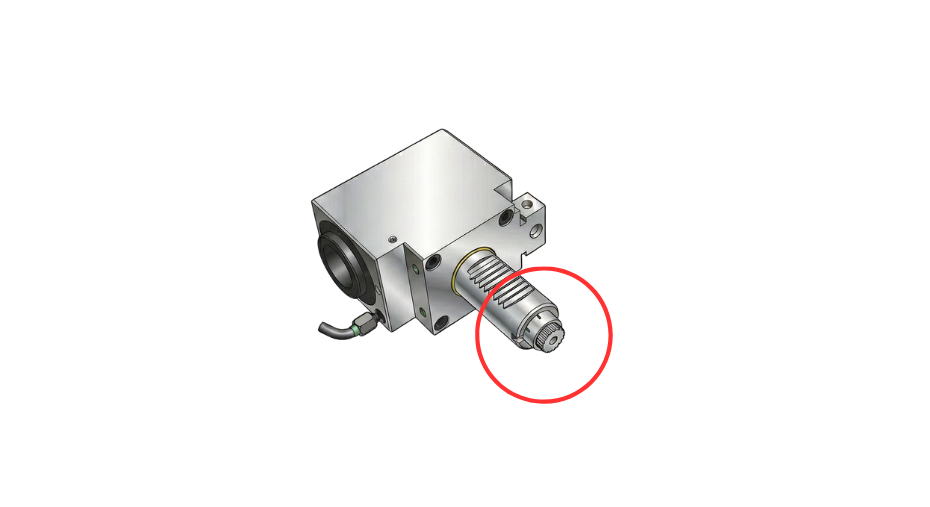
▲ The cylindrical shank (Shank, red circle) at the rear of the VDI toolholder inserts into the turret bore and is clamped by a single-bolt wedge block. The shank's contact area is smaller than BMT's flat surface — the fundamental reason for VDI's slightly lower rigidity.
Live Tool Power Transmission Differences
The difference between BMT and VDI is already apparent in standard turning; in turn-mill operations, the gap in power transmission efficiency becomes decisive.
- Transmission path: The drive shaft is typically thinner and undergoes multiple directional changes before reaching the tool end
- Vibration/heat: Longer path accumulates more vibration and heat — more pronounced during extended heavy-duty machining
- Milling capability: Suited for light milling, drilling, tapping, and other auxiliary operations
- Applicable scenarios: General turn-mill work; workpieces with modest milling requirements
- Transmission path: Drive motor connects directly to the toolholder — short, direct path with minimum energy loss
- Vibration/heat: Short path; significantly less vibration and heat, providing high machining stability
- Milling capability: Enables powerful milling on a lathe comparable to a machining center — realizing the true value of a turn-mill center
- Applicable scenarios: High-efficiency turn-mill operations; complex workpieces requiring aggressive side milling
How to Choose the Right Turret Interface?
BMT and VDI each have well-defined application scenarios. Below is a full comparison across five dimensions:
| Comparison | VDI System | BMT System |
|---|---|---|
| Clamping method | Single bolt + wedge block | 4 bolts + locating keys |
| Contact interface | Cylindrical surface contact | Large flat surface contact |
| Rigidity | Moderate (long lever arm, prone to vibration) | Excellent (monolithic feel, vibration-resistant) |
| Tool-change speed | Fast (suited for frequent changeovers) | Slower (requires multiple bolts) |
| Precision adjustment | Center-height micro-adjustment possible | Not adjustable (depends on machine accuracy) |
Based on the above comparison, the following three directions can help you make an informed decision:
-
1Prioritizing rigidity and live-tool machining performance → BMT For aggressive turn-mill milling, heavy-duty cutting, or applications demanding high precision and surface quality, BMT is the first choice. Complete in one setup, uncompromised milling power.
-
2Prioritizing tool-change speed and maintenance flexibility → VDI For high-mix, low-volume production requiring frequent tool changes, or where easy toolholder sourcing is important, VDI's fast changeover and broad toolholder selection offer distinct advantages.
-
3AEGIS CNC turret interface configuration AEGIS live-turret series primarily uses the BMT interface to ensure maximum cutting rigidity in turn-mill operations. For special requirements or specified toolholder standards, VDI interface is also available as an option — please contact our technical team to discuss the most suitable configuration.